Managing quality
Quality control

Quality control is the process of checking that goods or services meet a required standard. It detects faults by comparing output with the standards the business has set.
Quality control usually involves inspecting output. Many businesses check finished goods before they are sold, but checks can also take place at stages during production. Imagine a firm making phone cases. It might check the printed design after printing and the camera cut-out after cutting. If the printing is blurry, staff can stop or adjust production before more cases are printed badly. If 200 cases are printed before the fault is spotted at the end, all 200 may need reworking; a check after the first 20 could stop the problem much sooner.
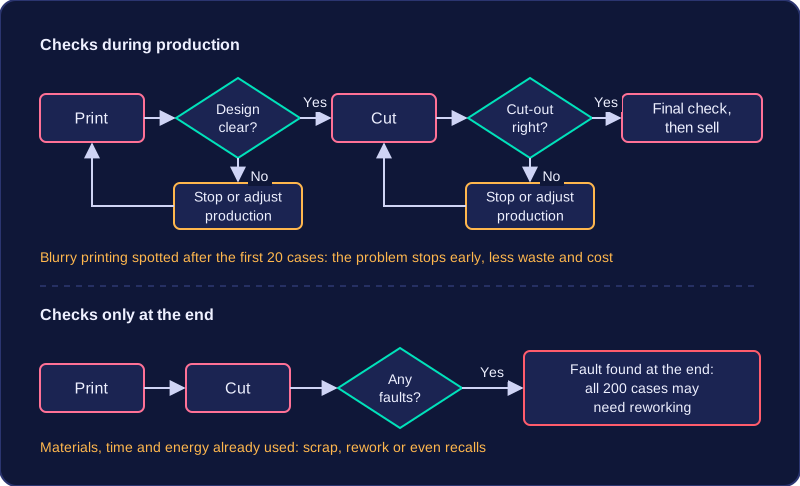
Why the timing of checks matters
Checking during production can identify problems early and reduce waste and cost. Relying only on checks at the end means faults may be found after materials, time and energy have already been used, so the business may have to scrap or rework items, or recall products from customers. Quality control still detects faults after they have happened, so it cannot prevent every fault. It is not the same as quality assurance, which manages quality throughout production rather than checking output at the end.
| When the check happens | What it can do | Possible result |
|---|---|---|
| During production | Spots a fault early so production can be stopped or adjusted | Less waste and lower cost |
| Only at the end | Finds the fault after resources have been used | More waste, rework or recalls |
Quality control in services
Services need quality control too. A service is often delivered and used at the same time, so checks happen as it is delivered rather than only once it is finished. A mobile bike repair service, for example, might test the gears straight after adjusting them, then test the brakes before handing the bike back. If something is wrong, it can be put right before the customer rides away, instead of becoming a complaint later.
Practise this
Edexcel GCSE Business · 2.3.3 Managing quality