The purpose of market research
Reducing risk through market research

Entrepreneurs carry out market research to reduce risk. Risk means the chance that time, money or other resources are wasted on something customers do not want. Market research gives you information at the planning stage, before you commit those resources, so you make choices using evidence rather than guesswork.
How research lowers risk
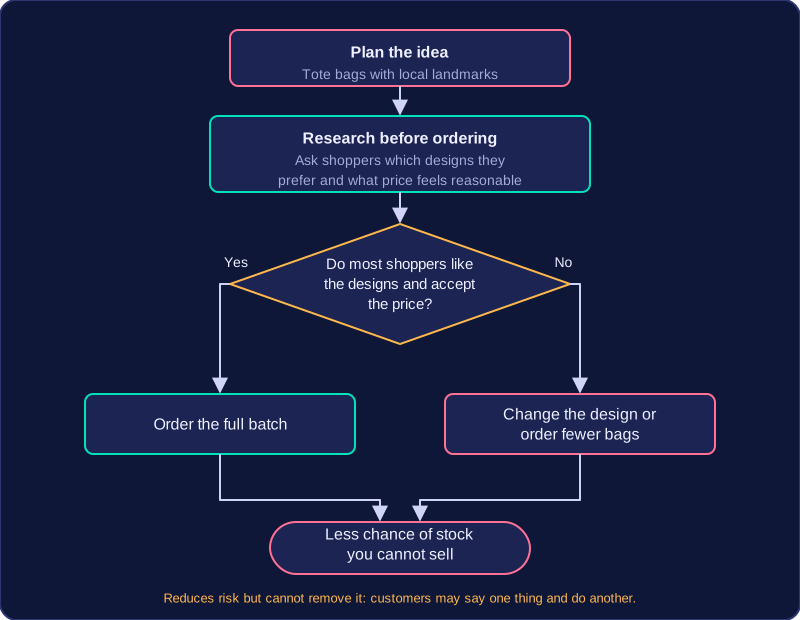
Research can show what customers like, what they would pay and whether a product is likely to sell. For example, imagine you plan to print tote bags with local landmarks and pay for a batch of bags, the printing and a stall at a weekend fair. Before ordering, you gather information from shoppers about which designs they prefer and what price feels reasonable. If most dislike the designs or expect a lower price than you need, you can change the design or order fewer bags. That reduces the chance of being left with stock you cannot sell.
Research also reduces the risk of developing or launching a good or service customers do not want. It is cheaper to find this out before you pay for materials, equipment or advertising than after launch.
Not a guarantee
Market research is not a guarantee of success. Customers may say one thing and do another, the market can change, and a small sample may not represent everyone. Research can reduce risk but cannot remove it completely.
Practise this
Cambridge National Enterprise & Marketing · 2.1 The purpose of market research