Ethical and Legal
Intellectual Property
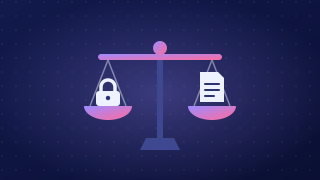
Intellectual property (IP) is a creation of the mind — an invention, a design, a brand identity or a piece of software — that the law treats as belonging to the person who made it. IP is not a physical object: it came from someone's ideas and effort, so the law gives the creator rights over it. The creator can decide how the work is used and take action against anyone who uses it without permission.
IP has financial value. It can be bought, sold, licensed or transferred to a new owner, just like a physical asset. A small studio that writes a popular game owns something valuable even though the game is only files on a server: another company might pay to buy the rights, or pay a fee to use them.
Why protecting IP matters
Protection gives creators a reason to keep making things. If anyone could copy your work and sell it, you could not earn from the time you spent building it, and companies would be unwilling to invest in new products. Protection also lets an owner defend their reputation, so a name that customers trust cannot be used by someone else on poor-quality goods.
Methods used in computing
| Method | What it protects |
|---|---|
| Copyright | Original creative work, including software and its code |
| Patents | Inventions such as new devices or technical processes |
| Trademarks | Names, logos and slogans that identify a company |
| Licensing | Permission to use software, on conditions the owner sets |
One product can be covered by more than one method at once. In an online revision app, for example, the code is protected by copyright, the app's name can be a trademark, and a new method of marking answers could be patented. A copy you download is used under a licence: it grants permission to use the software on the owner's conditions while ownership stays with the creator, so it does not give you the work itself.
Copyright is a legal right that protects original creative works, including software and its source code, from being copied or used without the owner's permission.
Copyright is automatic. You do not fill in an application or pay a registration fee. It applies as soon as an original work is created and recorded in a fixed form — saved as a file, written on paper or recorded as audio or video.
The owner decides whether other people may copy, publish, adapt, perform or sell the work. For example, if you write a Python game and save it, you hold the copyright. A classmate who copies your code and uploads it as their own has used your work without permission. You could give them permission to use it, but only on conditions you set.
What copyright protects
Copyright protects the way an idea is expressed — the actual code, text, music or recording — not the idea itself. Another student can write their own different program about the same idea, such as a game where you dodge falling asteroids, as long as they do not copy your code. The idea of the game is not protected; your particular code is.
In the UK, copyright usually lasts for the author's life plus 70 years, and some works are protected for 70 years after publication. The main law is the Copyright, Designs and Patents Act 1988.
A patent protects an invention, such as a new device, machine, process or technical method, including hardware inventions. If you come up with a new piece of technology or a new technical way of doing something, a patent is the protection that fits. Copyright covers creative works such as software, but it does not protect an invention.
What a patent gives you
A patent gives the owner the exclusive right to make, use or sell the invention. Anyone else who wants to do any of those things needs the owner's permission, which could be given through licensing.
For example, imagine you design a robotic arm for a garden centre that sorts bulbs by gently weighing each one. Without a patent, a rival firm could build and sell copies of your arm and you might earn nothing from your work. With a patent, you can stop them, or charge them a fee before they use your design.
How an invention gets a patent
A patent is never automatic. The inventor must apply to a patent office and pay fees, and the application is examined before a patent is granted. To be granted, the invention must be:
- new – it has not been made public before, even in a single online article;
- an inventive step – not an obvious change to something that already exists, such as selling an existing torch in a different colour;
- capable of industrial use – it can really be made and used by a business.
Time in exchange for knowledge
A patent lasts for a limited period, normally up to 20 years as long as the renewal fees are paid, after which anyone may use the invention. In return for that protection, the details of the invention are published, so a patent does not keep your idea secret: it protects the invention in exchange for making the technical knowledge public.
A trademark protects a sign that identifies a company's goods or services and distinguishes them from those of competitors. It stops another business from using a confusingly similar sign, so customers can recognise where a product or service comes from.
What can be a trademark?
A trademark can be a word, name, logo, symbol, slogan or shape. For example, an independent skateboard shop might register the name "DeckDare", a simple lightning-bolt logo and the slogan "Ride Your Own Line". A shape could be a distinctive bottle or phone case design. It does not have to be a logo: words, names, slogans and shapes can all be registered.
Registration and the registered symbol
To gain full legal protection, a trademark must be registered with a trademark office. Once registered, the owner can show the registered trademark symbol (®) next to it. Registration gives the owner the legal right to object if another trader uses the same or a similar sign on related goods or services. A trademark cannot protect program code or an invention; those are covered by copyright and patents.
How long does it last?
A registered trademark can be renewed indefinitely. It lasts for as long as the owner keeps paying to renew it, so a well-known trademark can stay protected for many decades. If the owner stops renewing it, the protection ends.
A brand is the overall identity and impression a company builds around its goods or services. It is wider than a trademark: a trademark is a legal right that protects a sign used to identify a company's goods or services, while a brand is everything customers see, hear and feel about the company.
A brand often includes several trademarks, such as its logo, product names and slogans. Alongside those protected signs sit things that a trademark does not cover on its own: advertising campaigns, the design of letterheads, bags and receipts, the way staff serve customers, and the company's personality and reputation. Together these shape what people expect from the business.
Brand and trademark compared
| Brand | Trademark | |
|---|---|---|
| What it is | The overall identity and impression of a company | A sign that identifies a company's goods or services |
| What it covers | Trademarks plus advertising, stationery, customer service, personality and reputation | A word, name, logo, slogan or shape |
| Legal status | Not a single legal right; it is built up over time | A legal right that can be registered and enforced |
| Example | Fern & Field's green, friendly, expert feel | Fern & Field's leaf logo and slogan “Let it grow” |
Take Fern & Field, a garden centre chain. Its leaf-shaped logo, its own-brand compost called GrowWell and its slogan “Let it grow” are trademarks, so the law can stop a rival copying them. But the brand also includes the green paper bags, the free gardening advice videos, staff who remember regular customers, and a reputation for healthy plants. A rival could copy none of the trademarks and still not match the brand, because its shops might feel unfriendly and its advice poor.
Registering a trademark protects one sign; it does not by itself create a brand. A trademark is not another word for a brand — it is one of the building blocks a brand is made from, and the brand grows from how the business behaves and how customers judge it.
Licensing is a method of intellectual property protection where the owner gives someone else permission to use their work, provided the user keeps to the conditions in a licence agreement. The owner still owns the work; they are only lending out the right to use it.
A software licence is the legal agreement saying what you may and may not do with a piece of software. It is usually granted in return for a fee and can control several things at once.
| Licence term | What it controls |
|---|---|
| Number of devices | How many computers it may be installed on, from one laptop to a school ICT room of 30 |
| Number of users | Whether one named person may use it or anyone in an organisation may log in |
| Length of time | Whether it lasts a year and is renewed, or is paid for once and kept |
For example, a school might buy a licence for 25 machines for a year, and the team that wrote the program can sell the same licence to hundreds of other schools without handing over the program itself.
Why owners license their work
Licensing lets an owner earn money while keeping ownership and control. They decide who may use the software and on what terms, and can charge more for wider use. Anyone who breaks those conditions can be stopped, because they never had the right to use the software that way.
Technical measures that back up the licence
A licence is only a legal document, so software is often protected by technical measures too:
- Licence keys and activation codes — a unique code must be typed in before the program runs, so a copy without a valid code will not start.
- Online registration and activation — the program checks the code with the owner's server, so one code cannot set up dozens of computers.
- Supplying the software over the internet — the program runs on the provider's servers and you use it online, so the code is never on your computer to copy.
Infringement is using, copying or distributing material that is protected by intellectual property rights without the owner's permission. It can involve copyright, a patent or a trademark, and the owner can take legal action against the person responsible.
What the owner can do
An owner who finds their work being used without permission can go to court to force the infringer to stop and to hand over or destroy the illegal copies. They can also claim compensation for the money they have lost. For example, a small games studio finds its paid app being sold cheaply on an unofficial website, so it sues for the sales it lost. A company that prints a rival's registered logo on its own hoodies is committing trademark infringement, and the rival can have the hoodies taken off sale and claim damages.
You do not have to mean to infringe: putting a photo you found online onto T-shirts you sell is still infringement, because you never had permission.
Penalties
Serious copyright or trademark infringement can be a criminal offence as well as a civil one, so it can lead to fines and even imprisonment. This is most likely when the copying is deliberate and done to make money, such as running a business that sells pirated copies.
Permission makes the difference
Using material with a licence — permission given on conditions — is perfectly legal. If your licence covers one installation, installing the software on your laptop is fine, but putting it on five machines goes beyond the licence and is infringement. Limited copying allowed by law, such as quoting a short extract to review a work, is also not infringement.
| Situation | Infringement? |
|---|---|
| Installing software on the number of devices the licence allows | No — you have permission |
| Adding a photographer's image to your own website without asking | Yes — copyright infringement |
| Selling copies of a game you did not make or buy the rights to | Yes — and a criminal offence |