Intellectual Property
Software Licensing
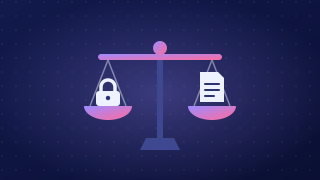
Licensing is a method of intellectual property protection where the owner gives someone else permission to use their work, provided the user keeps to the conditions in a licence agreement. The owner still owns the work; they are only lending out the right to use it.
A software licence is the legal agreement saying what you may and may not do with a piece of software. It is usually granted in return for a fee and can control several things at once.
| Licence term | What it controls |
|---|---|
| Number of devices | How many computers it may be installed on, from one laptop to a school ICT room of 30 |
| Number of users | Whether one named person may use it or anyone in an organisation may log in |
| Length of time | Whether it lasts a year and is renewed, or is paid for once and kept |
For example, a school might buy a licence for 25 machines for a year, and the team that wrote the program can sell the same licence to hundreds of other schools without handing over the program itself.
Why owners license their work
Licensing lets an owner earn money while keeping ownership and control. They decide who may use the software and on what terms, and can charge more for wider use. Anyone who breaks those conditions can be stopped, because they never had the right to use the software that way.
Technical measures that back up the licence
A licence is only a legal document, so software is often protected by technical measures too:
- Licence keys and activation codes — a unique code must be typed in before the program runs, so a copy without a valid code will not start.
- Online registration and activation — the program checks the code with the owner's server, so one code cannot set up dozens of computers.
- Supplying the software over the internet — the program runs on the provider's servers and you use it online, so the code is never on your computer to copy.
Practise this
Edexcel GCSE Computer Science · Intellectual Property