Intellectual Property
Copyright
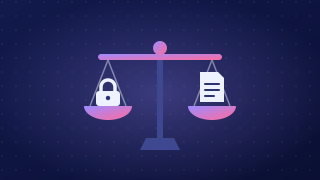
Copyright is a legal right that protects original creative works, including software and its source code, from being copied or used without the owner's permission.
Copyright is automatic. You do not fill in an application or pay a registration fee. It applies as soon as an original work is created and recorded in a fixed form — saved as a file, written on paper or recorded as audio or video.
The owner decides whether other people may copy, publish, adapt, perform or sell the work. For example, if you write a Python game and save it, you hold the copyright. A classmate who copies your code and uploads it as their own has used your work without permission. You could give them permission to use it, but only on conditions you set.
What copyright protects
Copyright protects the way an idea is expressed — the actual code, text, music or recording — not the idea itself. Another student can write their own different program about the same idea, such as a game where you dodge falling asteroids, as long as they do not copy your code. The idea of the game is not protected; your particular code is.
In the UK, copyright usually lasts for the author's life plus 70 years, and some works are protected for 70 years after publication. The main law is the Copyright, Designs and Patents Act 1988.
Practise this
Edexcel GCSE Computer Science · Intellectual Property
Edexcel GCSE Computer Science · Software Licences