Ethical and Legal
Software Licences
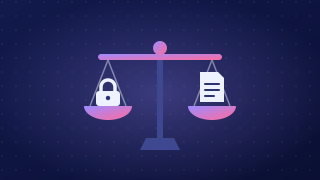
A software licence is a legal agreement that sets out how software may be used, copied, modified or distributed. When you install or use a program, you accept its licence, which states what you are and are not allowed to do with it.
Licensing protects intellectual property
Licensing is a method of intellectual property protection. It controls who is allowed to use software and the terms on which they may use it, so the creator keeps control of their work and can earn money from it or take action if someone ignores the terms.
For example, a small theatre group buys a ticket-booking program. The licence allows it on up to five office computers, so installing it on a sixth machine, or passing the installer file to another group, breaks the agreement even though nothing technical prevents it. The theatre group is in the wrong legally.
A legal control, not a technical one
A licence is a legal control. Passwords, firewalls and anti-malware are technical security measures: they use technology to block access or an attack. A licence does not physically stop anyone copying files. Instead it sets out what is permitted and gives the owner the right to take action against someone who breaks the terms. Licensing is therefore a completely different kind of protection from a firewall, and a licence is a permission granted by the copyright holder rather than the copyright itself.
Two models
The two main licensing models are open-source and proprietary, and they grant very different freedoms over the software and its source code. Whichever model is used, the software still has a licence and is still protected by copyright; some licences simply allow a great deal more than others.
Proprietary software is software released under a licence that you must accept, and usually pay for, before you may use it. For example, a small design studio might pay £45 per computer each year to use an image editor, and the money buys permission to use the program rather than ownership of it.
The licence sets the rules
The licence is a legal agreement, so breaking its terms can lead to legal action. It sets out limits such as how many devices or users may run the software, whether it may be copied onto a home computer, and whether it may be used in a business. A licence key is checked by the program to make the rules harder to break, but the permission itself comes from the licence. If a school pays for 25 copies of a music notation program and installs it on 40 machines, it has breached the licence even though the software still runs.
Closed source code
Proprietary software is normally closed-source. The developer keeps the source code — the human-readable instructions — and supplies users with a compiled program, which is the machine code the processor actually runs. Without the source code, changing the program is impractical, so users cannot adapt or modify the software: they cannot fix a bug, add a feature or translate the menus themselves. Instead they wait for the developer to release an update. Buying a copy gives you a licence to use the program; it does not give you the right to change its code.
Off-the-shelf
Most proprietary software is off-the-shelf: written once to be sold to thousands of customers, such as a photo editor or a word processor. Some proprietary software is custom-made for one organisation, such as a ticket system for a cinema chain, but it is still licensed restrictively and the code still stays private.
Open-source software is released with its source code — the human-readable instructions the programmers wrote — available to anyone who receives it. You can read how the program works, change it and build a better version, rather than only running the finished product.
Because the code is available, open-source projects are often built collaboratively. Programmers in different schools, charities and companies can fix bugs and add features, and firms may pay developers to work on a project many organisations rely on, so it can grow faster than one team could manage alone.
The licence sets conditions
An open-source licence normally lets you download, use, amend and redistribute the software without paying, but free download is not the whole story. The licence is a legal agreement and may set conditions on how you use or share it. For example, it might require you to keep the original author's name in the code, or say that if you redistribute a modified version you must release it under the same open-source licence.
Support may not be provided: with no company obliged to answer your questions, you rely on forums, documentation or your own IT team. You gain freedom to adapt the software, but you take on more responsibility.
For instance, a youth football club could take an open-source fixture generator, change the code to show pitch numbers and share its improved version with other clubs. It pays nothing to download the software, but it must follow the licence's rules when sharing the changed code, and no one will answer a support call.
The defining feature
The defining feature of an open-source licence is access to the source code and the freedom to modify it, not simply that it costs nothing. Some software that is free to download has closed source code, and some paid software comes with its source code; the licence, not the price, decides. Open-source software is still protected by copyright and still has a licence: the licence grants permissions rather than giving up ownership.