Factors to consider when pricing a product
Pricing across the product lifecycle
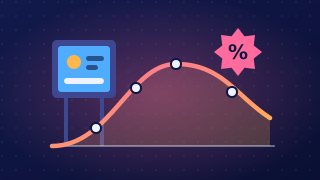
As a product moves through the product lifecycle, sales and competition change, so the price that worked at launch may not work later. Price should be checked and reviewed at each stage, because the same product can need different pricing as it ages.
| Stage | What is happening | Possible pricing response |
|---|---|---|
| Introduction | The product is new, customers do not know it and sales are low | A low price to encourage customers to try it, or a higher price if demand is expected to be strong and the product is distinctive |
| Growth | Demand rises and competitors notice, so they enter the market | The price may need to be reviewed as rivals appear |
| Maturity | Sales level off and competition is often strong | A competitive price, to maintain sales |
| Decline | Sales fall | Cut the price to boost sales, clear stock or attract price-sensitive customers |
A low launch price gives customers a reason to try something unfamiliar, because the risk of wasting money is small. A higher launch price only works when the business expects demand to be strong and the product is distinctive enough that customers cannot easily buy something similar. Avoid a high price when rivals already sell something alike, because customers will simply go elsewhere.
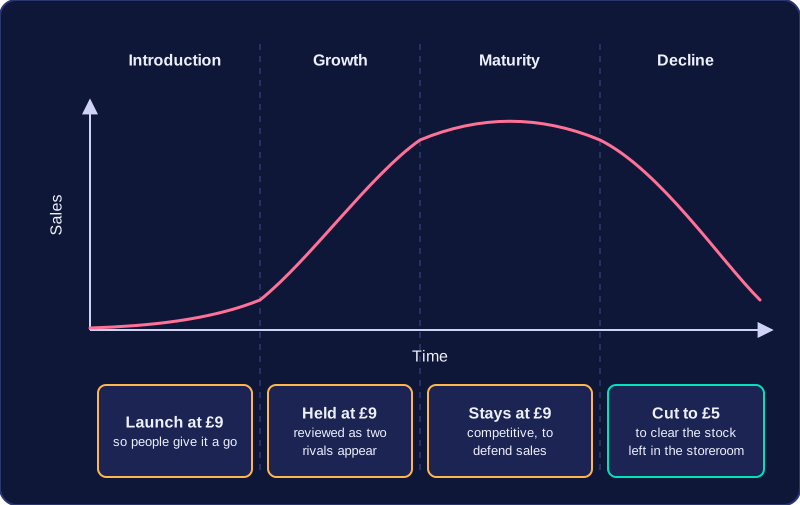
Worked example: Skyline, a start-up selling a new card game, launches at £9 so people will give it a go. In the growth stage two rival card games appear, so the price is reviewed and held at £9 to stay attractive against them. In maturity, sales level off and the price stays competitive to defend those sales. In decline, the business cuts the price to £5 to clear the stock left in its storeroom. One game, different prices, because the stage changed.
Practise this
Cambridge National Enterprise & Marketing · 4.9 Factors to consider when pricing a product