Factors to consider when pricing a product
Cost of production

Cost of production is the total cost of making or supplying a product. It includes materials, labour and other business costs, such as packaging, delivery or rent for the space where the product is made.
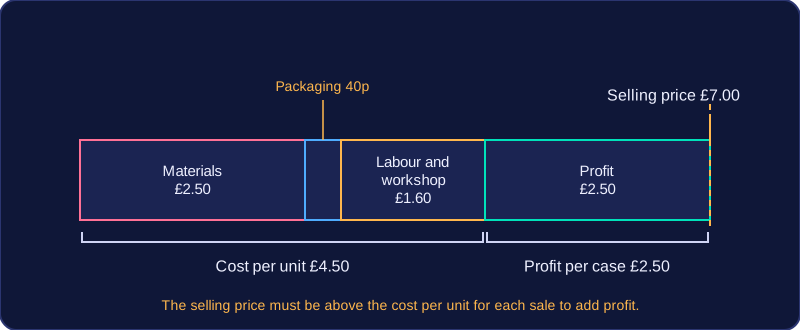
To work out the cost per unit, add the costs of making one item, including a share of fixed costs, or divide total costs by the number of units made. The selling price must normally be higher than the cost per unit. Each sale then covers its costs and adds to profit. If the price is below the cost of production, the business makes a loss on every sale. A business that keeps doing this may not survive.
Cost of production helps set a minimum price. You need to know your costs before you can decide how much profit to add. For example, a student makes personalised phone cases. Materials cost £2.50, packaging is 40p, and labour and workshop costs add £1.60 per case, so the cost per unit is £4.50. Charging £4.00 would lose 50p per case. Charging £7.00 gives £2.50 profit per case.
Reducing costs can let you charge a lower price or keep a higher profit margin at the same price. For instance, buying plain phone cases in bulk might cut materials to £2.10, so the cost per unit falls to £4.10. However, price should not be based on cost alone; other factors, such as income levels and competitor prices, also matter.
Practise this
Cambridge National Enterprise & Marketing · 4.9 Factors to consider when pricing a product