How to use break-even for decision making
Rearranging the break-even formula
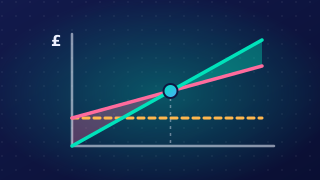
You can rearrange the break-even formula to work backwards when you know the break-even quantity and two of the three money amounts. Write the rearranged formula first, then put in the figures and check your answer.
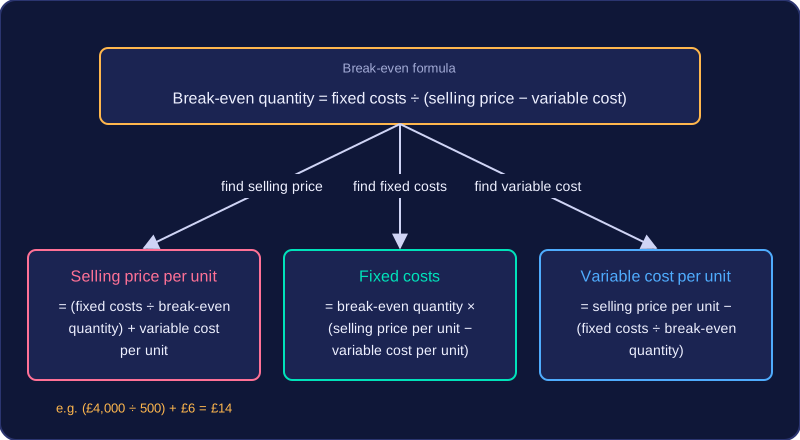
Working out the selling price per unit
Selling price per unit = (fixed costs ÷ break-even quantity) + variable cost per unit.
Worked example: break-even quantity is 500 units, fixed costs are £4,000 and variable cost per unit is £6.
Selling price per unit = (£4,000 ÷ 500) + £6 = £8 + £6 = £14.
Check it by putting £14 back into the original break-even formula: 500 × (£14 − £6) = 500 × £8 = £4,000 fixed costs. The answer is correct.
Finding fixed costs
Fixed costs = break-even quantity × (selling price per unit − variable cost per unit).
The amount left from each sale is the selling price per unit minus the variable cost per unit. It is the money from each sale left to cover fixed costs, so multiplying it by the number of units gives the total fixed costs covered at break-even.
Finding variable cost per unit
Variable cost per unit = selling price per unit − (fixed costs ÷ break-even quantity).
Dividing fixed costs by the break-even quantity shows the fixed cost each unit must cover. Taking this from the selling price leaves the variable cost per unit.
Practise this
Cambridge National Enterprise & Marketing · 3.4 How to use break-even for decision making