How to use break-even for decision making
Break-even quantity formula
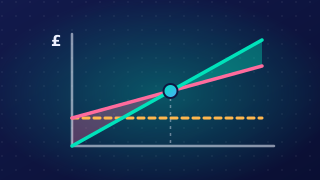
The break-even quantity is the number of units a business must sell to cover all of its costs. The formula is: break-even quantity = fixed costs ÷ (selling price per unit − variable cost per unit). Work it out by subtracting the variable cost per unit from the selling price per unit, then dividing the fixed costs by the result.
The selling price per unit is the amount charged for one unit. The variable cost per unit is the cost of the materials and packaging needed for one unit, plus any other costs that change with output. The amount left after this subtraction is the money from each sale that is available to cover fixed costs. Divide the fixed costs by this amount to get the break-even quantity.
For example, a business has fixed costs of £6,000 for the year. It sells each unit for £25 and the variable cost per unit is £10. First, £25 − £10 = £15. This £15 from each sale goes towards covering the £6,000 of fixed costs. Then £6,000 ÷ £15 = 400 units. The business must sell 400 units in the year to cover all of its costs.
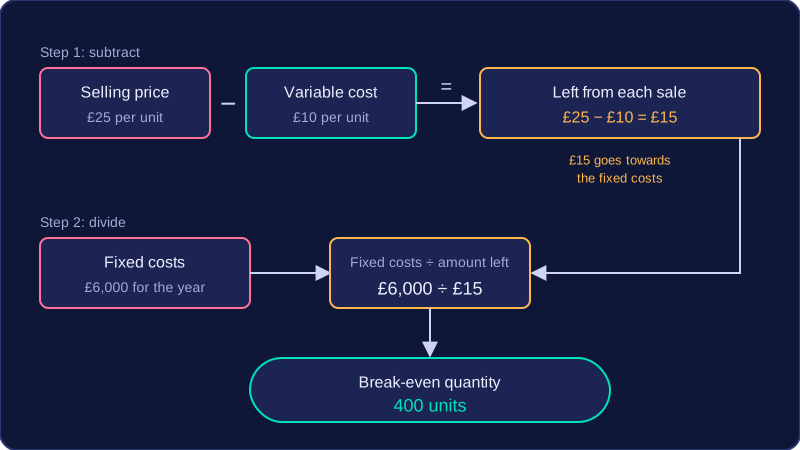
Write the subtraction step before the division, because marks are often available for correct workings even if the final answer is wrong. Make sure the fixed costs and the time period of the break-even quantity match. If fixed costs are £500 a month but you need the break-even quantity for a year, first change the fixed costs to a yearly figure: £500 × 12 = £6,000. Then use that £6,000 in the formula.
Practise this
Cambridge National Enterprise & Marketing · 3.4 How to use break-even for decision making