How to use break-even for decision making
Effect of changes on break-even
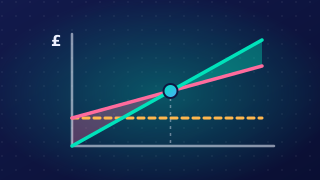
Break-even quantity is the number of units a business must sell to cover its total costs. It depends on three figures: fixed costs, variable cost per unit and selling price per unit. Change one of these while the other two stay the same, and the break-even quantity moves.
Higher costs raise break-even
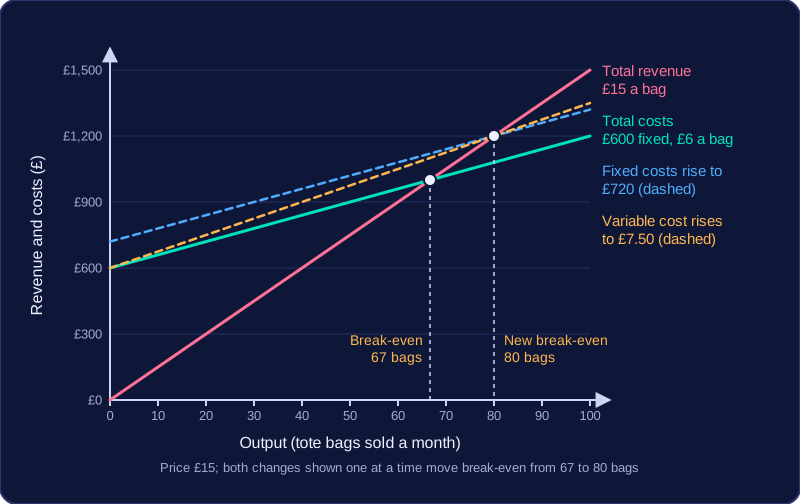
If fixed costs rise, the total costs line starts at a higher level. There are more costs to cover before the business breaks even, so it must sell more units. Take printed tote bags with fixed costs of £600 a month, a selling price of £15 and a variable cost of £6: £600 ÷ (£15 − £6) = 66.7, so 67 bags (round up). If fixed costs rise to £720, break-even becomes £720 ÷ £9 = 80 bags.
If the variable cost per unit rises, the total costs line becomes steeper, and the gap between the selling price and the variable cost shrinks, so more units are needed. A variable cost of £7.50 leaves £15 − £7.50 = £7.50 per bag, so break-even is £600 ÷ £7.50 = 80 bags.
A higher selling price lowers break-even
If the selling price rises, the total revenue line becomes steeper: each sale brings in more money to cover fixed costs, so fewer sales are needed. A price of £18 gives £600 ÷ (£18 − £6) = 50 bags, and a lower price would have the opposite effect and raise break-even.
Judging the effect
A lower break-even quantity is usually better because fewer sales are needed to cover costs. A higher break-even is not automatically better, because rising costs usually cause it. Lower fixed costs or a lower variable cost per unit would lower break-even; a lower selling price would raise it. Take each change on its own, with the other figures unchanged, so name the figure that is changing.
| Change (one at a time) | New break-even quantity | Effect |
|---|---|---|
| Fixed costs rise from £600 to £720 | 80 bags | Higher |
| Variable cost per bag rises from £6 to £7.50 | 80 bags | Higher |
| Selling price rises from £15 to £18 | 50 bags | Lower |
Practise this
Cambridge National Enterprise & Marketing · 3.4 How to use break-even for decision making