How to use break-even for decision making
Using break-even for decision making
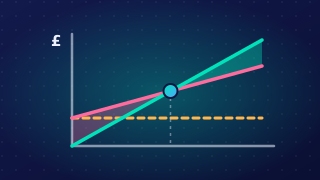
Break-even information tells an entrepreneur how many units they must sell before they start to make a profit. It is a planning tool: it helps someone judge whether an idea is financially viable (worth going ahead with) and supports decisions before money is spent. Remember that the break-even quantity is a number of units, not money.
What entrepreneurs use it for
- Checking viability: if break-even works out at 4,000 units a month but the likely market is only a few hundred, the idea probably will not work.
- Setting sales targets: the break-even quantity becomes the minimum sales target to beat, and every unit sold after that adds profit, so a lower break-even quantity is usually better.
- Pricing decisions: a higher selling price usually lowers the break-even quantity, because each sale covers more of the fixed costs. A lower price raises it.
- Budgeting and cost planning: it shows what happens if fixed costs (such as rent) or variable costs (such as materials per unit) change, so the entrepreneur can plan spending.
- Comparing options: work out the break-even quantity for each product or price separately, then compare the answers and find the difference. Never add two products' costs and prices together before using the formula, as that gives a meaningless figure.
- Marketing and production: it shows how many units to make and how much promotion is needed to reach the sales required to cover costs.
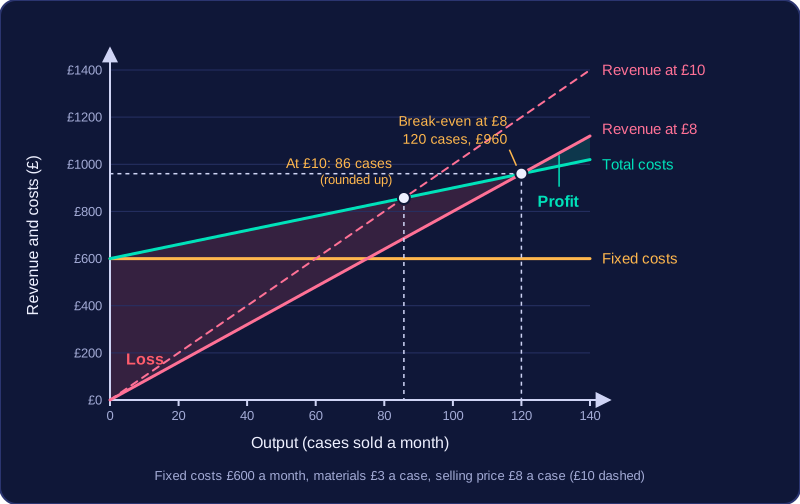
A student selling personalised phone cases has fixed costs of £600 a month for a market stall and a printer lease. Each case sells for £8 and uses £3 of materials. Break-even is £600 ÷ (£8 − £3) = 120 cases a month. Raising the price to £10 lowers break-even to £600 ÷ £7 = 86 cases (rounded up), so 34 fewer sales are needed, but only if customers still buy at £10.
What it cannot do
Break-even shows the sales needed to cover costs, but it is not a guarantee that those sales will happen: it is built on expected costs and prices, and demand can differ.
Practise this
Cambridge National Enterprise & Marketing · 3.4 How to use break-even for decision making