Cost of producing the product
Variable costs
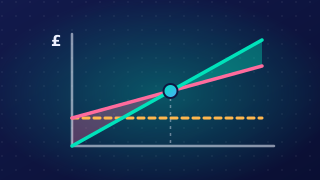
Variable costs are costs that change in total with the amount a business produces or sells. If output goes up, total variable costs go up; if output goes down, total variable costs go down. They are not a fixed amount you pay whatever happens.
What counts as a variable cost
Variable costs include:
- Raw materials and components — the physical parts that go into a product, such as flour for a bakery or fabric for a clothing maker.
- Packaging — the boxes, bags, labels and wrappers used for each item sold.
- Wages — usually hourly pay for work. Wages are treated as variable because the number of hours worked, and so the wage bill, changes with output. Salaries are different: they are a fixed cost.
Why they rise and fall
Each extra unit made or sold usually needs more materials, more packaging and more hourly labour. So total variable costs rise as production increases and fall as production decreases. If output falls to zero, total variable costs from making products fall to zero because no materials, packaging or hourly wages are needed for production.
Worked example
A small business makes scented candles. Each candle uses £2.50 of wax and wicks, £1.20 of jar and label packaging, and 12 minutes of a worker's time at £10 per hour. That is £2.00 of wages per candle. The variable cost per candle is £2.50 + £1.20 + £2.00 = £5.70.
| Output (candles) | Total variable costs |
|---|---|
| 0 | £0 |
| 100 | £570 |
| 200 | £1,140 |
| 300 | £1,710 |
The table shows total variable costs rising in direct proportion to output: double the candles, double the total variable costs.
Practise this
Cambridge National Enterprise & Marketing · 3.1 Cost of producing the product
Cambridge National Enterprise & Marketing · 3.4 How to use break-even for decision making