Cost of producing the product
Fixed costs
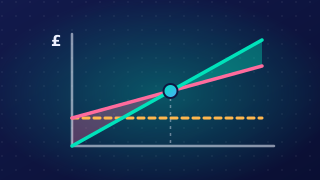
Fixed costs are costs that do not change when the level of output or sales volume changes. They are paid whether the business produces or sells anything or not, so they are still incurred when output or sales are zero.
“Fixed” means fixed with respect to output or sales, not that the amount can never be reviewed. A landlord could put the rent up next year, but for the period you are working with, the rent stays the same however much is made or sold.
Fixed cost examples
| Fixed cost | Example | Why it is fixed |
|---|---|---|
| Rent for premises | A small bakery pays £850 a month for its shop. | The £850 is due whether it sells 100 loaves or 1,000. |
| Salaries | A full-time dental receptionist is paid an annual salary of £22,800. | Salaries are annual or monthly pay for core staff and are treated as fixed regardless of output. |
| Insurance | A bike repair enterprise pays £240 a year to insure its tools. | The cover is paid for the year, even in weeks with no repairs. |
| Advertising and promotion | A new games café spends £120 a month on adverts. | The spending is planned to attract customers and is not set by how many visit. |
| Utilities | A studio pays for electricity, gas and water. | The bills are paid across the period and are not worked out from how many products are made or sold, so they are classed as fixed costs even though real bills can rise and fall with use. |
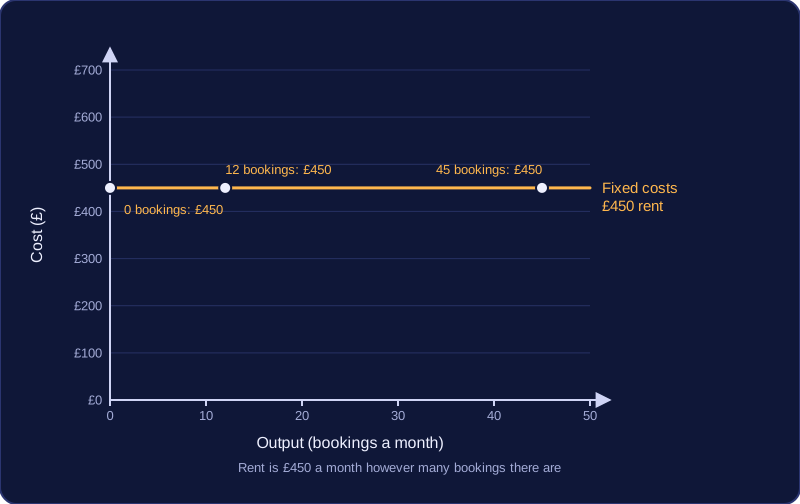
A dog-grooming enterprise rents a unit for £450 a month. The rent is £450 in a busy month with 45 bookings, a quiet month with 12 bookings, and even a month with no bookings at all.
Practise this
Cambridge National Enterprise & Marketing · 3.1 Cost of producing the product
Cambridge National Enterprise & Marketing · 3.4 How to use break-even for decision making