Effective recruitment
Recruitment and the recruitment process

Recruitment is the process of finding and hiring the best candidate for a vacancy. It is more than placing an advert: it runs from working out what the job needs, right through to helping the new employee settle in.
The stages of the recruitment process
- Analyse the requirements – the business decides what the job involves and what kind of person is needed, setting this out in a job description and person specification.
- Attract suitable candidates – the vacancy is advertised in a way that reaches the right people, so good applicants actually apply.
- Select the best applicant – applications are assessed and the strongest candidates are interviewed.
- Hire – the successful applicant is offered the job and given a contract of employment.
- Integrate – the new employee is introduced to the business, its people and its routines, so they settle in quickly and become useful sooner.
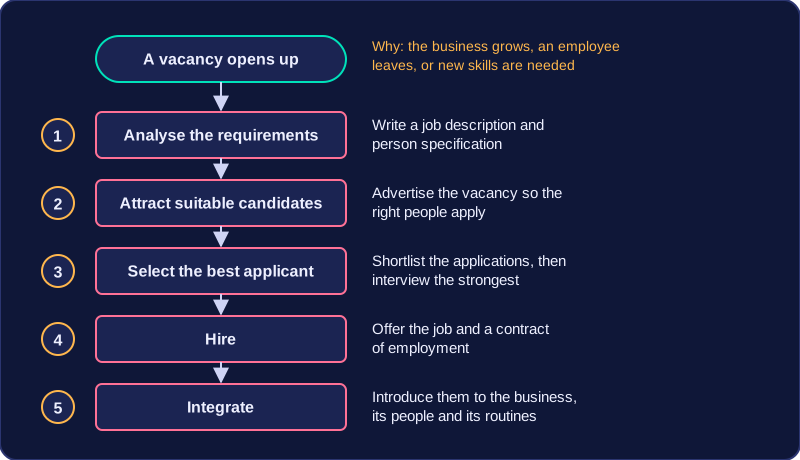
Why a vacancy opens up
- Growth – a bike repair shop that opens a second workshop needs extra mechanics, because the work now exists but there is nobody to do it.
- An employee leaves – through resignation or retirement, yet the tasks they did still need doing.
- New skills are needed – for example, a garden centre that starts selling online needs someone who can run its website and social media, a skill nobody already employed there has.
Selection: shortlisting and interviewing
Selection means assessing applicants to choose the best one. Shortlisting compares each application with the job requirements and keeps only the strongest matches, which saves the business the cost and time of interviewing everyone. Interviewing then tests candidates face to face – their skills, experience and how they would fit the team – so the final decision is based on evidence rather than paperwork alone.
Practise this
Edexcel GCSE Business · 2.5.2 Effective recruitment