Human Resource Decisions
Hierarchical and flat structures

A hierarchical structure (also called a tall structure) has many levels of management. Each manager usually has a narrow span of control, meaning they directly oversee only a few employees. This suits large, complex organisations that need clear lines of authority and close control.
Hierarchical: strengths and weaknesses
Clear roles mean employees know who to report to and what is expected. Close supervision helps managers spot mistakes, and defined promotion steps give staff a visible career path.
However, messages pass through several levels, so communication can be slow and distorted. Decisions take longer because approvals move up the hierarchy, and paying several layers of managers raises costs. The business may also react slowly to customer or market changes.
For example, a 1,200-employee maker of specialist hospital beds may use five management layers, from team leaders to a production director. This keeps safety checks tight, but a customer request for a design change may take weeks to approve.
Flat structures
A flat structure has few levels of management and often a wide span of control: one manager oversees many employees. It suits small businesses or organisations that want quick decisions, teamwork and employee empowerment.
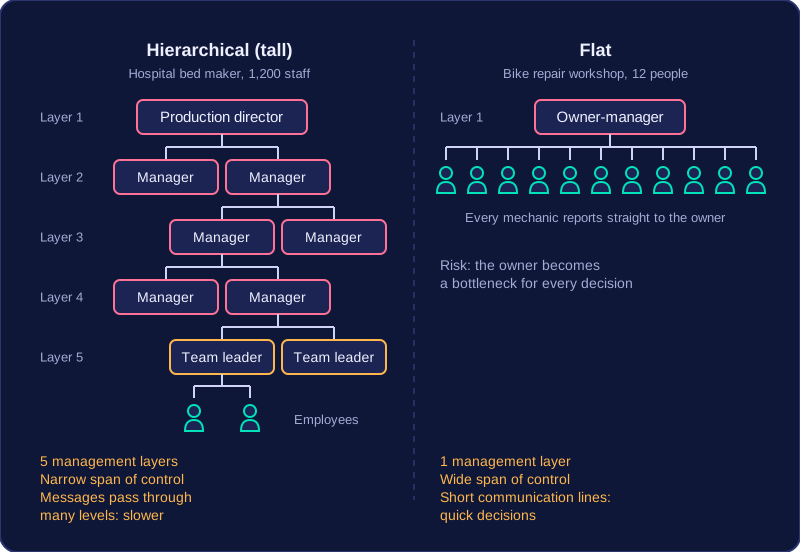
Short communication lines let information move quickly, so decisions are fast and management costs are lower. Giving staff more responsibility can increase motivation and teamwork. The drawbacks are that managers can become overloaded, supervision is less close and there are fewer promotion opportunities; without clear job descriptions, staff may also be unsure who does what.
For example, a 12-person bicycle repair workshop might have one owner-manager who every mechanic reports to directly, so mechanics can agree small extra repairs with customers on the spot. The owner must avoid becoming the bottleneck for every decision.
Practise this
Edexcel GCSE Business · 2.5.1 Organisational structures