Sharing Resources
Client-Server Disadvantages
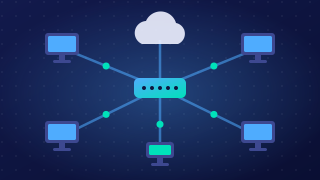
In a client-server network, computers rely on a central server to provide services. That reliance brings drawbacks.
Cost and specialist staff
Server hardware is expensive because it is built to be powerful and reliable, and server software often needs its own licence, sometimes charged per user. A specialist, usually a network manager, is needed to install and look after the network: creating accounts, setting access rights, installing updates and fixing faults. That means paying a salary or a support contract, and without that expertise the server may be set up insecurely or not work properly.
For example, a community radio station with eight computers may find the cost of a server, its software and a network manager hard to justify.
Failure and overload
If a server fails, clients lose the services that server provides. This is a single point of failure: one broken server can stop everyone using shared files or a web server. It does not necessarily mean the whole network stops, because the client computers may still work, but the failed server's services are unavailable. Backup servers can reduce this risk, but they add more cost.
Many clients using a server at the same time can overload it, making responses slow for everyone. A central server has a limited amount of processing power and network capacity, so a rush of requests can build up in a queue.
Practise this
OCR GCSE Computer Science · Sharing Resources