Sharing Resources
Client-Server Advantages
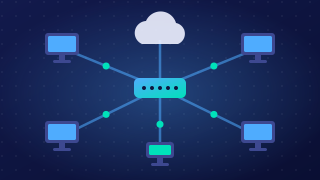
A client-server network has several benefits, and they all come from one idea: central control. The server holds and manages the shared resources, and the client computers ask the server for them, so the managing only has to be done once rather than on every machine.
Files and backups in one place
Users' files are stored on a file server. Your work belongs to your account rather than to one particular computer, so you can open the same files from any computer on the network. Because everything sits on the server, backups can be taken from that one machine instead of being arranged separately on each computer. A chain of five bike repair shops, for example, could keep every job sheet on its file server: a mechanic at any branch can look up a repair started at another branch, and the whole set of records is backed up overnight from a single place.
Security run from one place
The server is where accounts are created and looked after — a username and password for each person, their access rights, the network policies everyone must follow, and the anti-malware software that is installed on each client. A network manager sets an account up once and it works on every computer, and a new restriction, such as blocking a type of file, reaches every machine from the server. This keeps security consistent, because no computer is left running an older, weaker setup that somebody forgot to change.
Software rollouts and availability
New software and updates can be installed on the server and rolled out to every computer from there, so the same job is not repeated machine by machine, which saves a lot of time. Servers are also designed to stay switched on and available all the time, so the services and files they provide are there whenever a client needs them. That makes the model work well for large networks with many users: the server supplies the shared services once, rather than every computer having to manage and share its own resources.
Practise this
OCR GCSE Computer Science · Sharing Resources