Appropriate forms of ownership for start-ups
Sole trader
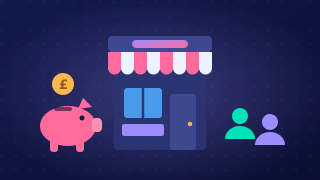
A sole trader is a business owned by one person. That person is the only legal owner, even if they employ staff to help run the business.
Control and decision-making
The sole trader makes every decision: what to sell, what prices to charge, which suppliers to use and when to open. Nobody else has to agree, so changes can be made quickly. Total control also means choosing your own working hours, which suits fitting a business around study or caring responsibilities.
The trade-off is that all the pressure sits with one person. There is no co-owner to test ideas with, which can feel lonely, and if the owner is ill or on holiday, the business may not run at all.
Profit, loss and liability
The sole trader keeps all the profit after tax, and carries all losses personally, so a quiet month hits their own income directly.
They also have unlimited liability: the owner is personally responsible for every business debt. If takings cannot cover a bill, the owner may have to use personal savings or sell personal possessions to pay it. This risk is the main drawback of the form, and it can make an owner cautious about borrowing to grow.
Advantages and disadvantages
| Advantages | Disadvantages |
|---|---|
| Quick, cheap and easy to set up | Unlimited liability |
| Keeps all profit after tax | May lack certain skills or knowledge |
| Total control and fast decisions | Harder to raise finance than some other forms |
| Financial privacy: accounts are not made public | No one to share decisions or workload with |
| Flexible working hours and arrangements | Business may stop if the owner is absent |
Take a sole trader running a small pottery studio in a rented workshop. She keeps all of the profit and can decide that evening to run an extra class. But when a clay supplier's invoice for £940 cannot be paid, she must find the money herself, because the debt is hers, not the business's.
Practise this
Cambridge National Enterprise & Marketing · 5.1 Appropriate forms of ownership for start-ups