Appropriate forms of ownership for start-ups
Limited and unlimited liability
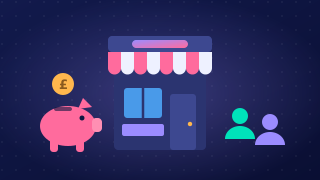
Liability describes who is financially responsible for a business's debts. It is not the same as whether the business makes a profit or a loss; it is about who must pay the business's debts if it cannot.
With unlimited liability there is no cap on the owner's responsibility. If the business cannot pay what it owes, the owner may have to use personal savings or sell personal possessions, such as a car, to settle the debts. Nobody has agreed a limit, so the owner's own money is on the line.
With limited liability the owner's financial responsibility is capped, usually at the amount they invested in the business. Once that money is gone, personal savings and possessions are protected from the business's debts.
| Unlimited liability | Limited liability | |
|---|---|---|
| Cap on what the owner can lose | None | Usually the amount invested |
| If debts cannot be paid | Personal savings and assets are at risk | Personal savings and assets are protected |
| Effect on the owner | More personal risk, so often more cautious | Less personal risk, so more willing to take calculated risks |
Why this matters for a new business
Limited liability lowers the personal financial risk of starting up. An owner who knows their own money is shielded may be more willing to borrow, launch a new product or open a second outlet. Investors may also feel safer putting money in, because the owners' exposure is clear and bounded.
Unlimited liability raises personal risk. Someone facing it may think carefully before taking out a large loan or expanding quickly, since a failure could cost them their home as well as the business. That caution can protect them, but it can also hold the business back from growing.
For example, Priya puts £6,000 into a start-up that later fails owing £25,000. With limited liability she loses her £6,000 and no more. With unlimited liability she could be pursued for the £25,000 owed as well, on top of her £6,000. Different forms of ownership give owners one or the other, so the form chosen affects how much personal risk the owner carries.
Practise this
Cambridge National Enterprise & Marketing · 5.1 Appropriate forms of ownership for start-ups