Wired Connections
Range
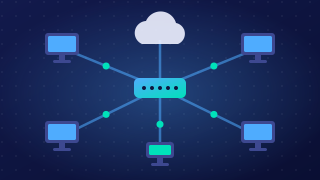
Range is the maximum distance over which a signal can travel and still be received reliably. It is measured in units of distance, such as metres. At the receiving end, the device must be able to tell a 1 from a 0 clearly; once the signal is too faint or distorted, that is no longer possible.
Why cable length limits range
In a wired connection, range depends on the length of the cable and on the signal weakening as it travels along it. A signal leaves the sender at full strength, but some of its energy is lost in the cable with every metre, so the longer the cable, the weaker the signal that arrives at the far end.
If the signal fades too much, the receiver may misread bits and the data is corrupted, or nothing usable arrives at all. That is why every cable has a practical maximum length rather than carrying data any distance.
Range in practice
A garden centre keeps its router in the office and runs a cable to a card machine at the far end of the plant area, about 180 m away. Test payments made near the office work, but payments from the far end sometimes fail: the signal has become too weak to be read reliably. The manager moves the router to a cupboard halfway along, so each cable run is well inside its usable range and payments go through. Fitting a cable that loses less signal over distance, such as fibre optic, is another way to extend the range.
Range is only about distance. It does not tell you how much data the link can carry or how long a message takes to arrive; bandwidth and latency describe those separate characteristics.
Practise this
Edexcel GCSE Computer Science · Wired Connections
Edexcel GCSE Computer Science · Wireless Connections