Wired Connections
Wired vs Wireless Performance
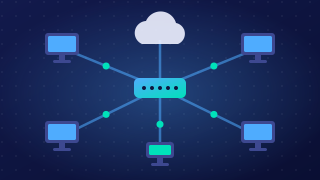
A wired connection carries data as electrical or light signals through a physical cable, and that direct path is what makes it outperform a wireless link in most situations. Speed, bandwidth, latency, reliability and security all benefit when the signal never has to travel through the air.
Faster, wider and quicker to respond
A wired link usually gives a higher speed, meaning more bits arrive every second, and just as importantly that speed stays consistent. A wireless signal weakens with distance and competes with everything else broadcasting nearby, so its throughput rises and falls; a signal tucked inside a cable does not suffer that. A cable also offers higher bandwidth, so it has the capacity to carry more data at once, which you notice when several large files move together.
Latency is the delay between data being sent and data being received. Wired links usually keep it low because the signal stays inside the cable, away from interference and from other devices competing for airtime, so data is rarely corrupted and rarely has to be sent again. A video call over a cable replies almost instantly, while the same call over a weak Wi-Fi signal can stutter and lag.
Steadier and harder to intercept
Wired links are more reliable: walls, weather and other people's wireless traffic do not disturb a signal travelling inside a cable, so it behaves the same way every time. They are more secure too, because anyone wanting to intercept the data needs physical access to the cable or the equipment it plugs into, rather than simply being within range of a broadcast.
Choosing wired
Put those points together and wired suits any fixed device that needs speed, capacity, quick responses or protection. A desktop computer in an editing studio, for example, stays on one desk and pushes huge video files to a shared drive all day, so a cable gives it the steady high bandwidth and low latency the job demands.
Practise this
Edexcel GCSE Computer Science · Wired Connections
Edexcel GCSE Computer Science · Wireless Connections