Extension strategies
Extension strategies

An extension strategy is an action taken to prolong the life of a product and increase or maintain its sales when they may be falling. It is used when a product has reached a later stage of its product life cycle and its sales need supporting, rather than when the business is creating a completely new product. Keeping an existing product selling is often cheaper than launching a new one, and customers already recognise it.
Products include both goods, such as a backpack, and services, such as a mobile phone contract, so extension strategies can apply to either.
The main extension strategies are:
- Advertising
- Price changes
- Adding value or improving specifications
- Exploring new markets
- New packaging
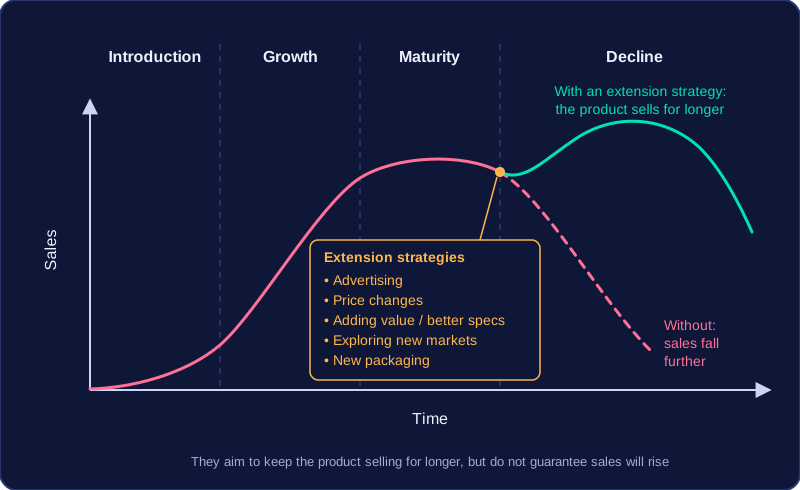
Each one works in a different way, but they all aim to keep the product selling for longer. For example, a business might advertise to remind customers about a product that has been around for years, or explore a new market to find new customers. Extension strategies do not guarantee that sales will increase or that decline will stop, but they give the product a better chance.
Extension strategies are not the same as sales promotion. A sales promotion is a short-term incentive, such as a money-off coupon or a free gift, designed to boost sales quickly. An extension strategy is a longer-term action designed to keep the whole product selling for longer. For example, a business might run an advertising campaign over several months to remind customers of a product's benefits, rather than offering a one-week discount.
Practise this
Cambridge National Enterprise & Marketing · 4.8 Extension strategies