Profit/loss
Profit and loss
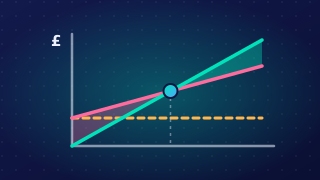
Profit is what is left when total costs are subtracted from revenue. It is calculated as profit = total revenue − total costs. Revenue is the income a business receives from selling its products, before anything is taken away; profit is what survives once the costs of making those sales have been covered. A business can have high revenue and still end up with very little profit if its costs are high too.
Profit, loss and zero profit
When total revenue is greater than total costs, the answer is positive, so the business makes a profit. When total costs are greater than revenue, the answer is negative and the business makes a loss. In between sits zero profit: revenue exactly equals total costs, so nothing is left over but nothing is lost either.
A loss is a negative profit, not negative revenue. The business has still sold its products and taken money in, so its revenue stays a positive income figure; only the profit has fallen below zero. Imagine a craft stall selling candles that takes £750 in a month but spends £1,050 on wax, wicks, jars and the pitch fee. Revenue is £750 and profit = £750 − £1,050 = −£300, so the stall makes a loss of £300.
| Month | Total revenue | Total costs | Revenue − total costs | Outcome |
|---|---|---|---|---|
| January | £750 | £580 | £170 | Profit of £170 |
| February | £750 | £750 | £0 | Zero profit |
| March | £750 | £1,050 | −£300 | Loss of £300 |
To find profit or loss from the two totals, subtract total costs from total revenue and read the sign of your answer: positive is a profit, negative is a loss, zero means neither. Always use revenue and costs for the same time period, because a month's revenue measured against a year's costs tells you nothing useful about how the business is doing.
Practise this
Cambridge National Enterprise & Marketing · 3.3 Profit/loss
Cambridge National Enterprise & Marketing · 3.5 Importance of cash