Cost of producing the product
Calculating missing costs
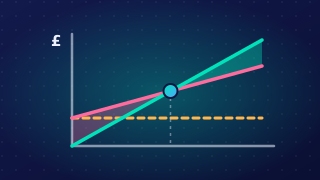
If you know a business's total costs and its variable costs, you can find its fixed costs by subtracting the variable costs from the total costs. Total costs are made up of fixed costs plus variable costs, so the missing part is the total minus the part you already know. You subtract rather than add, because the variable costs are already included in the total, so adding them would count them twice.
For example, a youth club runs a pop-up smoothie stall. One weekend, total costs are £1,260 and variable costs for fruit, cups and wages are £740. Fixed costs are £1,260 - £740 = £520. The pitch rent and insurance are the stall's fixed costs.
You can use the same idea the other way round. If total costs and fixed costs are known, variable costs are total costs minus fixed costs. Suppose another weekend has total costs of £1,500 and fixed costs of £600. Variable costs are £1,500 - £600 = £900. Subtracting the known cost from the total leaves the missing cost.
| What you know | What is missing | Calculation |
|---|---|---|
| Total costs £1,260; variable costs £740 | Fixed costs | £1,260 - £740 = £520 |
| Total costs £1,500; fixed costs £600 | Variable costs | £1,500 - £600 = £900 |
Practise this
Cambridge National Enterprise & Marketing · 3.1 Cost of producing the product