Network Devices
Network Interface Controller NIC
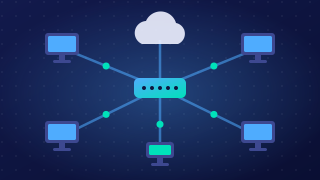
A Network Interface Controller (NIC), also called a Network Interface Card, is the hardware inside a device that lets it join a network. Without a NIC, a device has no way to send or receive data over a network.
Data inside a device is held as digital data (binary), which cannot travel along a cable or through the air as it is. The NIC's main job is conversion: it turns the device's data into signals for the transmission medium, and turns incoming signals back into data the device can use. For example, a weather station on a school roof sends readings down a copper cable to a science lab; its wired NIC changes the readings into electrical signals, and the NIC in the lab changes those signals back into data.
Wired and wireless NICs
A wired NIC has a port where a cable plugs in. A wireless NIC connects without a cable, using radio waves. NICs are usually built into the motherboard rather than being separate cards you add, so do not assume a NIC is always something you can take out.
One NIC per connection type
Every networked device needs a NIC, and each NIC handles one type of connection. A device that can use both a cable and a wireless link therefore needs a NIC for each: a wired NIC for the cable and a wireless NIC for the radio link. Such a device uses its wired NIC when a cable is plugged in and its wireless NIC when it is not.
Practise this
OCR GCSE Computer Science · Network Devices