LAN / WAN
Computer Networks
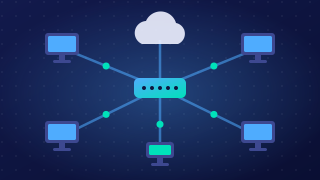
A network is formed when two or more devices are linked together so that they can exchange information and make use of the same files and hardware. The links can be made with cables, wirelessly or a mixture of both; the important thing is that the devices are able to pass information between them.
Networking makes several useful things possible at the same time:
- Sharing files and data: a file saved by one connected device can be opened by another, so you do not have to copy it by hand.
- Sharing hardware: several devices can use one printer or one scanner, so the organisation buys and maintains only one of each.
- Sharing one internet connection: a single connection can serve many connected devices instead of paying for one for every device.
- Communicating: users can send messages or work together on the same project.
- Accessing files from any connected computer: you can log in at a different machine and still reach your work.
For example, a small library with four public computers, a staff laptop and one printer could connect them as a network. A visitor saves a document on one computer; a librarian opens it on the laptop and prints it without moving files on a memory stick. That is still one network, even though it connects only a handful of devices.
Networks are classified by the geographical area they cover, not by how many computers are connected. The two types are a local area network (LAN), which covers a small area such as one building, and a wide area network (WAN), which covers a large area such as several towns, a country or further. A network with many devices in one building is still a LAN, and a network joining a handful of devices spread across different countries is a WAN.
Practise this
OCR GCSE Computer Science · LAN / WAN