Impact of AI
Privacy Impact of AI
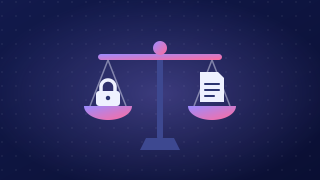
AI systems improve when they have plenty of examples to learn from, so companies and public bodies have a strong reason to collect more personal data than they really need, and to keep it for longer. Details that look harmless when you hand them over — quiz scores, step counts, the time you tap a bus pass — become valuable once software can spot patterns in them. This is a privacy issue rather than a security one: nothing has been hacked, because the data was given away.
Facial recognition
Facial recognition software compares a face in a camera image with photos held in a database, so a person can be identified and their movements logged without being asked or told. A shop, a stadium or a school gate can run it on everyone who walks past. You cannot change your face like a password, so once it is in a database it can be matched again and again, long after you agreed to it.
Conversations that are kept
Typing to a chatbot or speaking to a voice assistant feels as private as thinking aloud, but each conversation is stored on the company's servers. It can be read by staff and used as training data for later versions of the system, so a question about a health worry or a family argument can be reused years after you asked it. You usually accepted this in the terms and conditions, which is why keeping it can be legal and still make people uneasy.
Guessing what you never said
AI can infer sensitive facts from data that looks dull on its own, because it is good at joining clues together. You never chose to reveal the sensitive fact, so you cannot correct it or take it back.
| Dull data collected | What AI may work out |
|---|---|
| Which lessons you open first in a homework app each evening | Which subjects you find hardest |
| When a smart meter shows a big jump in electricity use | What time your family gets up, and when the house is empty |
| When your phone joins the home wi-fi and when it leaves | Roughly what time you go to bed and how much sleep you get |
Practise this
OCR GCSE Computer Science · Impact of AI