Low and High Level Languages
Choosing a Programming Language
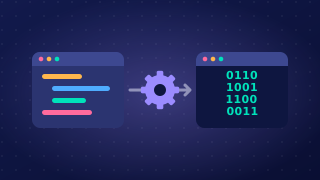
Choose a language by asking what the program must do. A low-level language is a good fit when you need direct hardware control, speed or memory efficiency. A high-level language is a good fit for applications, portability and rapid development.
For example, a bike computer that reads a wheel sensor and updates the speed on screen may need low-level code so it can respond quickly and use little memory. A revision quiz app with menus, scores and saved progress is better suited to a high-level language: you can build it quickly and run it on a laptop or tablet with little rewriting.
What you trade away
| Choice | Why it suits the job | Trade-off |
|---|---|---|
| Low-level language | Direct hardware control; speed; memory efficiency | Harder to learn, write, read and debug; less portable |
| High-level language | Applications; portability; rapid development | May be less efficient; less direct control over hardware |
The trade-offs are connected. Low-level code gives precise control, but it is written for one type of processor, so moving it to different hardware means rewriting it. High-level code lets you build a working program sooner than you could in a low-level language, but the finished program may use more memory or run more slowly than a carefully optimised low-level version. The right choice is the one whose strengths matter most for that program, and whose weaknesses you can accept.
Practise this
Edexcel GCSE Computer Science · Low and High Level Languages