Preventing Network Security Risks
Encryption
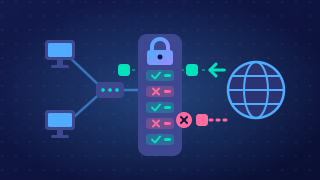
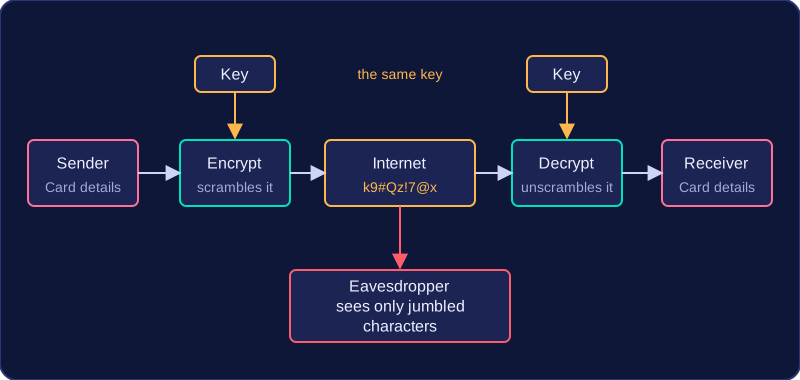
Encryption is the process of scrambling data using an encryption key so that it becomes unreadable to anyone who does not have that key. The key is the piece of information used to turn the scrambled data back into something you can understand. Because data is useless without the key, encryption protects information even if someone manages to get hold of it.
Encryption is often used when data is transmitted, especially over the internet. If you buy a ticket online, the details you type travel across the internet encrypted. Anyone who intercepts that traffic sees only meaningless characters, so your card details and address stay private. Without encryption, an eavesdropper on a public network could read everything you send.
Protecting stored data
Data that is stored can be encrypted too. Websites often encrypt the passwords they keep in their databases. If a hacker breaks in and copies the database, a password stored as plain text such as BlueOtter19 could be read straight away. Encrypted, the same password appears as a long jumble of characters, and the hacker would need the key to work out what it really is.
Devices such as laptops and phones can have their storage or hard disk encrypted as well. If the device is lost or stolen, the files on it cannot be opened without the key or PIN. This is why encryption is not the same as password protection: a password check controls who can log in, but encryption scrambles the data itself, so it stays protected even if someone removes the drive and connects it to another computer.
Practise this
Edexcel GCSE Computer Science · Preventing Network Security Risks