E-waste
Lifecycle and Disposal of Digital Devices

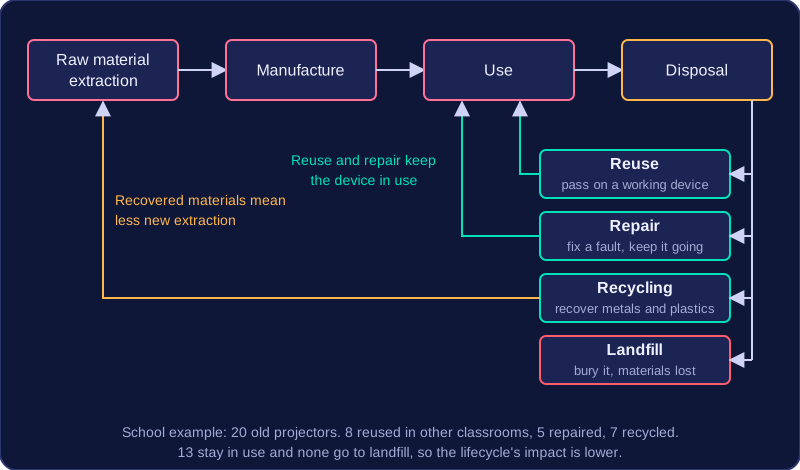
A digital device has a lifecycle: raw materials are extracted, parts are manufactured, the device is used, and finally it is disposed of. Disposal is what happens when a device is no longer wanted or working, and the devices thrown away then are e-waste. Disposal is not automatically the end of the device’s useful materials.
Lifecycle stages
| Stage | What happens |
|---|---|
| Raw material extraction | Metal ores are mined and oil is obtained to make the metals and plastics inside a device. |
| Manufacture | Materials are turned into components and assembled into a device, using energy. |
| Use | The device does the job it was bought for. |
| Disposal | The device is reused, repaired, recycled or sent to landfill. |
Raw material extraction and manufacture use resources and energy, so keeping a device in use for longer means these stages are not repeated as soon, lowering the overall environmental impact.
Disposal choices
- Reuse — pass on a working device to someone else. The materials and energy already used go to further use, so no new device is manufactured for that person.
- Repair — fix a fault so the device keeps working. This delays disposal, and with it the need for a replacement, so the impact of manufacture is spread over more years of use.
- Recycling — separate and recover materials such as metals and plastics. Recovering them reduces the need to extract new raw materials and keeps the device out of landfill.
- Landfill — bury the device. Its materials are not recovered, so more raw materials must be extracted for new products, and the device takes up space in the ground.
The environmental impact of disposal therefore depends on the method chosen and on whether materials are recovered. As an example, a school clears out 20 old digital projectors. Sending all of them to landfill loses their metal and plastic. Instead, 8 that still work go to other classrooms, 5 are repaired, and the other 7 are recycled: 13 projectors stay in use instead of being replaced, and the materials in the rest are recovered. The impact is lower across the whole lifecycle, because disposal decisions are part of the lifecycle, not a separate issue.
Practise this
Edexcel GCSE Computer Science · E-waste
Edexcel GCSE Computer Science · Manufacturing Technology