E-waste
Environmental Impacts of E-waste

Digital devices can contain hazardous substances — materials that are dangerous to living things and to the environment around them. While a device is being used, those materials stay sealed inside it. Once the device is thrown away, careless disposal can let them escape and cause pollution, which means damage to air, land or water.
Landfill
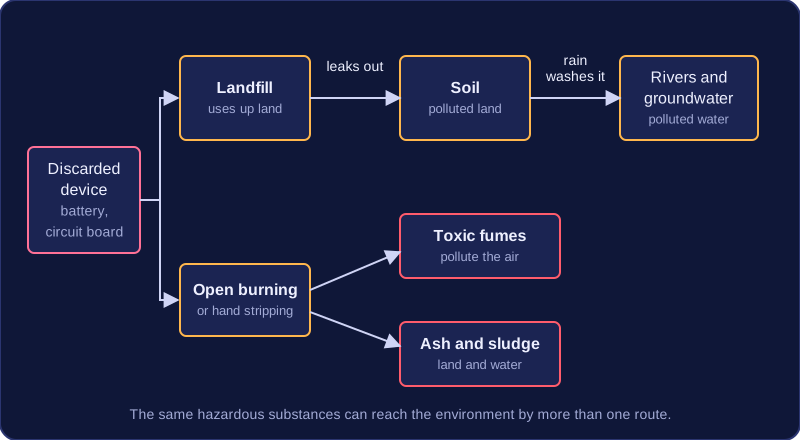
Burying e-waste in landfill causes problems in two ways. The waste takes up land, so that space can no longer be used for homes, farming or wildlife. Over time the outer casing of a device can crack or corrode, and substances from batteries and circuit boards leak into the surrounding soil. Rainwater then washes those substances into streams, rivers and underground water, so the pollution spreads far beyond the tip.
For example, a cracked tablet dropped into a household bin is buried with general rubbish. Its battery slowly corrodes, and the chemicals inside seep into the soil beneath it and then into a nearby ditch after heavy rain.
Burning and unsafe processing
Some e-waste is set alight or pulled apart by hand to reach the metals inside. Burning plastic casings, cables and circuit boards releases toxic fumes into the air: gases and fine particles that are poisonous to breathe and that later settle on land and water nearby. The ash and sludge left behind are contaminated too, so the harm carries on after the fire has gone out.
Three kinds of pollution
| Where | How e-waste causes it |
|---|---|
| Air | Open burning of plastics and cables releases toxic fumes and particles |
| Land | Landfill uses up land, and leaking chemicals contaminate the soil |
| Water | Rain washes leaked chemicals and ash into rivers and underground water |
The same hazardous substances can reach the environment by more than one route, which is why disposing of devices properly matters so much.
Practise this
Edexcel GCSE Computer Science · E-waste
Edexcel GCSE Computer Science · Manufacturing Technology