Potential rewards and drawbacks for risk taking
Work-life balance drawback
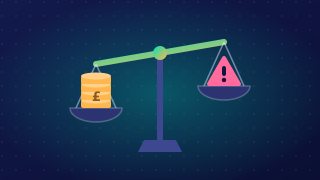
Work-life balance is the division of time between work and leisure. The work-life balance drawback means that taking the risk of running your own business can leave you finding it hard to switch off, working long hours, and having less time for relaxation, family and friends.
Why it happens
When the business is yours, there is always something left to do: orders to pack, messages to answer, takings to add up. At the start there may be no staff to share the jobs with, so the business depends on you. Your mind stays on it even when you are not working, so the working day never really ends.
For example, Amara leaves her job at a garden centre to run a mobile pet-grooming van. She answers booking messages during a family meal and plans the next day's route while watching her daughter's swimming lesson. Nobody asked her to, but the business is hers, so it follows her everywhere. After a few months she realises she has no free time left.
Why it is a drawback, and what it is not
- Time away from work is when you relax and see family and friends. Without it, those parts of your life are squeezed out, and you may find it harder to run the business well because you never get a proper break.
- It is about how your time is shared between work and leisure, not about balancing tasks inside a working day. Choosing how long to spend on paperwork rather than serving customers is not work-life balance.
- It is one of the four drawback categories. It is a consequence for the entrepreneur of taking the risk.
Practise this
Cambridge National Enterprise & Marketing · 1.2 Potential rewards and drawbacks for risk taking