Potential rewards and drawbacks for risk taking
Financial drawback
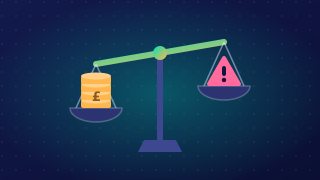
A financial drawback is a way that taking a business risk can cost the entrepreneur money. It covers losing money or income, making no profit, putting your own money or possessions at risk, taking on debt, and, in the worst case, going bankrupt — being unable to pay debts you are responsible for.
Setting up usually means paying out before you earn anything: stock, equipment, a website, insurance. Business failure is a financial risk, so if enough customers never arrive, the money you put in may never come back. Profits can also take a long time to appear, so the income you were relying on does not turn up when you expected it.
How the money can be lost
- Losing what you invested: the money you put in at the start is gone if the business does not work.
- Making no profit: sales may only cover costs, leaving nothing for you to live on.
- Putting more money in: to keep trading you may have to feed in extra cash, which is a further loss if it fails.
- Debt: money you borrow personally, such as a loan or credit card balance, must be repaid even if the business closes.
- Bankruptcy: if debts are bigger than you can pay, you may be made bankrupt, which can affect your personal finances.
For example, Amir prints custom T-shirts. He spends £350 on a heat press and plain shirts, and borrows £200 on his own credit card to rent a market pitch for three months. After two months he has made sales of only £120. He must now choose whether to put more of his own money into stock, while the card payment falls due whether or not he sells another shirt.
What makes this a drawback is the effect on you as the owner — money you cannot get back, or a bill you still owe — rather than a general problem for the business.
Practise this
Cambridge National Enterprise & Marketing · 1.2 Potential rewards and drawbacks for risk taking