Revision notes
Responsible Use
Contents
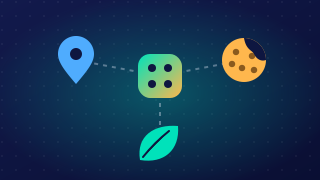
Shared data is data made available to more than one service, organisation or purpose. It can include location-based data, transactional data, cookies and data exchanged between services. Organisations collect, use and store huge amounts of data, so they must manage how it is used, who it is shared with and how it is eventually disposed of.
Benefits of sharing data
Sharing lets services give you more relevant information, adverts, updates and recommendations. An organisation can also use shared data to improve what it offers: spotting popular services or options, common customer issues, busiest times and where a new service or location is needed.
For example, a sports centre shares its booking data with its café, equipment-hire desk and coaching team. The bookings show that badminton courts are busiest on weekday evenings and that junior coaching fills up quickly, so the centre runs more junior sessions. The same data lets the café staff up before busy evenings and lets the centre email a member a reminder about a booked session and suggest a quieter time to use the pool.
Risks
Sharing data increases privacy and security risks because personal data may be exposed or misused. Once data has been passed on, the organisation that collected it has less control over it. Users can be tracked across the internet, and their location can be revealed if they do not control their privacy settings. A free puzzle game that shares your device's location with advertisers, for instance, could let those advertisers work out which shops and venues you visit.
Managing shared data
Responsible use means weighing the benefits against the risks and looking after data throughout its life. That includes disposal: when staff replace old laptops or phones, the devices must be wiped or destroyed before they leave the organisation, because they can still hold customer records. Sharing data is only responsible when there is a clear purpose, people's information is protected and the organisation can justify why it is needed.
Location-based data is data about where a user or device is. Mobile devices can use GPS to work out their position and share it with apps. You can also share your location yourself by typing your postcode into a delivery app, giving an app permission to use it, or posting it on social media.
Real-time location data shows where you are at that moment. It can be used to track where a user is and share that information with others. This can be useful: a maps app can find a nearby pharmacy, a weather app can send a warning about heavy rain approaching your area, a travel app can send updates about delays on your route, and an event app can show what events are happening nearby. Organisations can use location data to send relevant information, adverts and local offers for nearby services and events, so the message is more useful to the person receiving it.
Location data can also support fraud protection. A payment system can compare where a card is being used with where the user's phone is. If the card is used in Edinburgh while the phone is in Cardiff, the mismatch may suggest the card has been used without permission.
There are risks too. Location data can reveal where you live, work or spend time, so you should think carefully before letting technology reveal your location. If a game asks for your location but does not need it to work, you can deny that permission in the app's settings, and you should switch off location sharing when it is not needed. Responsible use means using location data for a clear purpose and giving users control over whether their location is shared.
Transactional data is data recorded from a transaction: a sale, a booking, or a customer using a loyalty card. It is not simply any data an organisation happens to hold — it is the record of a transaction taking place. It can be collected by the business the customer bought from, or by a card company that handles the payment.
Each record can hold what was bought, when and where it was bought, how often that customer buys, how much was spent, and customer details. Loyalty card data is transactional data too, and because the card is linked to a named customer it can also reveal customer demographics and shopping habits.
Finding trends, patterns and demographics
Transactional data is analysed to find trends and patterns — general changes or repeated behaviour found by looking at data over time — and customer demographics, the characteristics of customers that help an organisation understand who they are.
For example, a garden centre records every till transaction. Looking back over one spring, the manager finds that Saturday mornings are busiest and need extra staff, that the lavender range sells least, that takings are highest in May, that the town-centre shop sells far more bedding plants than the out-of-town one, and that most customers come from two nearby villages. Those are patterns and demographics in action. The centre can reorder stock, cut back on the poor seller, discount quiet weekday afternoons, advertise in a village it is not yet reaching, and run a planting workshop on a quiet weekday. Displaying the figures in graphs makes these patterns easier to spot than reading a long list of records.
# Plant sales recorded at a garden centre across one Sunday
sales = ["shrub", "lavender", "shrub", "bird feeder", "shrub", "bird feeder", "shrub"]

print("Transactions recorded:", len(sales))

for item in ["shrub", "bird feeder", "lavender"]:
    print(item, "sold", sales.count(item), "times")
Output:
Transactions recorded: 7
shrub sold 4 times
bird feeder sold 2 times
lavender sold 1 times
Drawbacks to weigh up
Analysis is not free: staff may need to be employed to extract and analyse the data, which adds cost. The data must also be accurate — errors in transactional data lead to bad decisions, such as ordering 500 extra umbrellas because a mistyped quantity made them look popular.
A discount or special offer helps the customer rather than the business, so it is not a benefit of transactional data to the organisation.
A cookie is a small text file that a website creates and stores on your device so the site can keep data about you. It is not a program, virus or malware; it is only a text file.
What cookies do
Cookies let a website recognise your device when you return. They can keep you signed in so you do not have to type your details again, keep items in a shopping basket until your next visit, and store preferences such as a larger text size or dark mode. They also allow personalised content and adverts based on what you did before.
Most cookies hold named-value pairs and a unique ID. A nature club's wildlife-recording site might store patch=woodland, month=May and an ID such as t6wn. The club keeps your list of sightings on its server. When you return, your browser sends the cookie back and the site uses the ID to find your sightings.
First-party and third-party cookies
A first-party cookie is created and used by the same website you are visiting, usually for signing in, baskets and settings. Its scope is limited to that one site, so it is generally low risk.
A third-party cookie comes from a different organisation, such as an advertiser or analytics service, whose code is built into the page. These cookies follow users from site to site so adverts can be matched to them, or count how many visitors view each page.
| Feature | First-party cookie | Third-party cookie |
|---|---|---|
| Created by | The website you are visiting | Another organisation, such as an advertiser or analytics service |
| Scope | One website | Many websites |
| Typical use | Signing in, remembering settings, keeping a basket | Following activity across sites to choose adverts, measuring how a site is used |
You can manage or delete cookies in your browser settings. The difference matters because first-party cookies only relate to the one site that set them, while third-party cookies can follow your activity across many sites.
Cookies are small text files that websites save on your device. For the person using the device, cookies have several drawbacks.
Storage space
Every cookie takes up a little storage space on your phone, tablet or computer. One cookie is tiny, but a browser that collects them from many sites over months can build up a large number. If the cookies are never deleted, that stored data can slow the device down over time and take up room you need for other files.
Less privacy
Tracking cookies record what you do online: the pages you open, the searches you make and the things you click. That activity can be used to build a picture of your habits and interests, and the picture can be used to target adverts at you. For example, an advertising company can place cookies on both a revision site and a gaming site. Together the cookies show that you have been reading about volcanoes and looking up cheat codes, so a profile of your interests can be built even though you did not choose to share that. Your privacy is reduced because your behaviour is being watched and recorded.
Security risk
Cookies are stored as text files on your hard drive, and other people may be able to access them. If you lend your laptop to someone, or someone else gets into your files, they may be able to read the information a cookie holds. That is the security risk: the file can be read by the wrong person. Cookies are not programs, viruses or malware, so a virus is not the security risk here; the risk is that a stored text file is read by someone it should not be.
Not every problem caused by cookies is a drawback for the user. If visitors keep rejecting cookies and a shop loses the chance to show them adverts, that is a problem for the shop, not a drawback for the user.
Data exchange between services happens when one system sends information to another. The receiving service may not be able to use it straight away because it expects a different format (how each value is written) or configuration (how the data is arranged). Data transformation is the conversion carried out so the destination system can read and process the shared data.
What transformation can involve
A destination system may have a different data structure from the source system, so the data cannot simply be copied across. It must be converted to match the destination's structure. Common changes include:
- Changing the order of fields so they follow the destination's layout.
- Splitting or combining fields, such as separating a delivery address into street and town, or joining a room number and building name into one location field.
- Changing date or number formats, such as turning 07-11-2026 into 2026-11-07, or writing 1200 as 1,200.
- Replacing codes with full values, such as changing membership code S to Student, because a code alone may mean nothing to the receiving service.
For example, a sports centre's booking system sends a member's details to a payment service. The booking system stores the address as one field, but the payment service needs a street field and a town field. It also stores the membership type as S, while the payment service needs Student. Without these changes, the payment service cannot match the record to the right customer and price.
Why poor transformation causes problems
If data is poorly transformed, it may be unusable or cause errors in the destination system. A date in the wrong format might be rejected, an unreplaced code might be meaningless, and split fields might not match the destination's structure. This can stop a booking, payment or record update from working.
Responsible use means planning and checking the transformation, so the destination system can understand and process the data it receives. Shared data is only useful when the receiving system can use it correctly.
Personal data is any data that can identify a living person. The person it relates to is the data subject. Before an organisation shares someone's personal data with another organisation, it normally needs that person's consent. Passing it on without consent is both unlawful and unethical.
Responsible use of shared data means meeting legal, privacy and ethical requirements. It applies to both individuals and organisations. The organiser of a community choir should not pass members' email addresses to a music shop for advertising without asking the members first, even if the list is easy to copy.
Legal and privacy requirements
Personal information is protected by law. The Data Protection Act 2018 and UK GDPR set the legal requirements for protecting personal data in the UK. There is also a duty of confidentiality, which reinforces the right to privacy: information given in confidence should not be passed on without permission. Privacy means personal data should be kept secure and seen only by the people who need it. Staff should only access records they are authorised to view, so a leisure centre receptionist should only open a customer's booking record to change a swimming lesson, not to look up a friend's home address.
Ethical use
Ethical use means not using data simply because it is available, especially if it was collected for a different purpose. An organisation should seek the data subject's permission before sharing their information. Ask whether sharing is necessary, fair and lawful, not just whether it is technically possible.
Every digital system has an environmental cost before it is even switched on. A phone, laptop or games console starts as rock and metal dug out of the ground, is built in a factory that uses large amounts of electricity, then travels hundreds or thousands of miles to reach you.
Mining raw materials
Devices need raw materials such as copper, gold, tin and aluminium, plus rare materials like lithium and cobalt that are found in only small amounts. Getting them means clearing land and blasting rock, which destroys habitats and can pollute soil and streams.
- Heavy digging machines burn diesel, releasing carbon dioxide.
- Metals such as copper are spread thinly through the rock, so huge amounts of ore must be dug out and crushed, which uses a lot of energy and leaves large waste heaps.
- The crushed rock is then heated or treated with chemicals to separate out the metal, burning yet more fuel.
For example, the lithium in a phone battery is pumped from under salt flats, and the tiny amount in one phone adds up when millions are made each year.
Making and moving the device
Factories that refine metals, print circuit boards and mould plastic cases use a lot of electricity. Much of the world's electricity still comes from burning fossil fuels such as coal and gas, so manufacturing releases carbon emissions into the atmosphere. The same happens when the finished device is moved: cargo ships, planes and lorries burn fuel and give off carbon dioxide and fumes.
So even a device that is switched off has already added to climate change through the way it was made and delivered.
Every digital system uses electricity while it is on, and the amount depends on three things: the device (a large desktop draws more than a phone), its settings (a bright screen or active Wi-Fi uses more power) and how you use it (gaming or video streaming uses more than typing a document). A usage and settings policy is a set of rules or defaults that reduce this energy use and help a battery last longer between charges.
Automatic power settings
Auto power off schedules a device to shut down at a set time, so it cannot be left running overnight by accident, which saves electricity. Auto sleep (standby) puts a device into a low-power state after a period of non-use: the screen turns off and the processor slows right down, cutting power use while keeping your work ready. An animated screen saver does not save power, because the screen and system still draw almost the same current.
Everyday power-saving choices
- Lower the screen brightness: the display is one of the biggest power users, so dimming it reduces power consumption and the device needs charging less often.
- Turn off Wi-Fi and Bluetooth when not needed: these radios use power to search for networks and stay connected.
- Close unused tabs and apps: each open tab or app keeps the processor working and memory in use, so closing them means less processing and less power drawn.
- Use airplane mode or low power mode: airplane mode switches off the wireless radios, while low power mode limits non-essential tasks such as automatic updates and visual effects, so the battery lasts longer.
For example, a phone used on a long coach trip for revision videos and music might fall to 20% battery if the screen stays at full brightness, Bluetooth headphones stay connected and several apps are left open. A shorter idle time before standby, a dimmer screen, closed apps and low power mode can leave enough charge to last until arrival. Organisations often apply these settings across all their devices as a policy, rather than relying on each person to remember.
When a digital system reaches the end of its useful life, throwing it away creates waste. Old phones, tablets, laptops, printers, cables and televisions are all part of a fast-growing rubbish stream called e-waste, also known as techno trash. A lot of e-waste ends up in landfill — holes in the ground where household and business rubbish is buried under soil and covered over.
Poisoning soil, water and food chains
Digital devices are not harmless once buried. Their circuit boards, screens and batteries contain toxic chemicals, and as casings crack and corrode in the damp, those chemicals leak out into the surrounding ground. Rain then washes them into streams, rivers and underground water supplies. Plants take up contaminated water, animals eat the plants, and people eat both — so the poison travels along the food chain and builds up in the bodies of wildlife and humans. The result can be serious ill health, such as damage to the nervous system or organs, in animals and people living near or downstream of a dump.
Greenhouse gases and climate change
Buried e-waste also produces greenhouse gases as the waste slowly breaks down without oxygen. Greenhouse gases trap heat in the atmosphere, which contributes to climate change and global warming. Other toxic gases given off in landfill add to air pollution. One device in a skip may look like a small problem, but multiply it by the millions of devices thrown away each year and the gases add up.
Why burning is not the answer
Some waste is incinerated (burned) instead of buried. Burning e-waste can release toxic fumes that harm people who breathe them in, along with carbon emissions that add to climate change. This is why e-waste should not be sent to landfill or burned: the chemicals and gases it releases damage soil, water, wildlife, health and the climate. Keeping e-waste out of landfill keeps those toxins and gases out of the environment.
When a device is no longer useful to you, it can still be useful to someone else. Responsible disposal means getting rid of old equipment in a way that keeps it out of landfill, so the device, its parts or its materials can be used again.
Donate, sell or recycle
- Donating — a device that still works can go to someone who needs it, such as handing a working tablet to a local youth club or a younger cousin. The device keeps being used, so its useful life is extended and less waste is created.
- Selling — a second-hand shop or an online buyer may pay for a phone that still switches on, which extends its life in the same way and gives you some money back.
- Recycling — equipment that no longer works can be taken to a recycling point where it is taken apart. Recycling is not just about destroying devices: working parts can be reused and the materials inside, such as metals and glass, can be recovered.
WEEE regulations
WEEE stands for Waste Electrical and Electronic Equipment. These regulations are law, not a voluntary scheme: sellers and manufacturers have a legal duty to take back and recycle the electrical goods they supply. That means you can hand an old device back to the shop or the manufacturer and they must take it back for recycling. For example, a shop that sells electric kettles has to accept an old kettle back for recycling when a customer buys a new one.
Why this matters
Recovering materials through recycling means fewer new raw materials have to be mined or made from scratch. That saves the energy needed to produce them and reduces the pollution that production causes. Donating and selling do their bit too, because every extra year a device is used is a year without a new one being manufactured and without waste being created.
When you replace a digital system, the old devices are retired and new ones are brought in. That swap has environmental costs: it creates more waste and pollution, and it increases the energy used to make and move replacement equipment.
More toxic waste
Most replacements turn old devices into waste. Digital devices can contain materials that are harmful if they escape into the environment, so replacing systems increases the amount of toxic waste that must be managed. If this waste is dumped or poorly handled, harmful substances can get into soil and water. That is pollution, and it can harm wildlife when animals drink contaminated water or eat contaminated food.
Extra manufacturing and transport
New systems do not appear from nowhere. Factories must make them, and vehicles must deliver them. Both stages usually burn fossil fuels, which releases carbon emissions and fumes into the air. Replacing equipment more often means these emissions happen more often. Sometimes e-waste is burned too, which releases toxic fumes. For example, imagine you run a garden centre and swap all your handheld stock scanners for new models. The old scanners become waste, while making and delivering the replacements adds to factory and transport emissions.
Landfill and climate change
Not all replaced equipment is recycled. Much of it is thrown away and can end up in landfill. More replacement means more waste sent to landfill, and landfill sites release greenhouse gases that contribute to climate change. Together, these effects create wider environmental problems: more pollution and harm to wildlife, higher carbon emissions, climate change and damage to ecosystems.
When a digital system becomes slow or unreliable, an organisation can upgrade parts or replace the whole system. The choice balances cost, performance and environmental impact.
Upgrading
An upgrade keeps the main system and improves one or more parts. In a traditional desktop, adding more memory (RAM) or fitting a larger solid-state drive can often be done with little effort. Upgrading extends the system's life and reduces waste, so fewer new devices are made. However, it is limited by compatibility: a new part must work with the existing processor, connections and software. An upgraded machine may also not match the performance of a newly designed system.
Replacing
A replacement means buying a new system and moving the organisation’s work onto it. This may be needed when upgrades cannot deliver enough performance, when an old system needs frequent repairs, or when its software updates have been discontinued. Replacing avoids downtime (time when a system cannot be used) from repeated breakdowns. Newer hardware is faster, so staff complete tasks more quickly and are more productive. Newer systems are usually more energy-efficient, so electricity bills are lower. They also have better support, because manufacturers and software companies still provide updates and help.
Weighing it up
| Consideration | What it means |
|---|---|
| Cost | Upgrading a few parts is often cheaper than buying all new equipment, but repeated repairs add up. |
| Performance improvement | A new system may be much faster than an upgraded old one. |
| Compatibility | An upgrade only works if new parts fit the existing system and software. |
| Energy efficiency | Newer systems often use less electricity. |
| Support | New systems receive updates and technical help for longer. |
| Environmental impact | Upgrading extends life and reduces waste; replacing creates more waste. |
For example, a small three-screen cinema could add memory to its box-office computers so they keep working for another year. If customers still queue while the booking screen loads, and the ticket-printing software no longer receives updates, lost ticket sales and repair bills can make a full replacement the better choice.
Electronic distribution means making a document available as a digital file, such as a PDF you open from a shared folder or a class website, instead of giving people printed pages. It is usually more environmentally friendly because no printed copy has to be made or delivered to you.
A hard copy uses paper, made from trees, and ink or toner. Printing also uses electricity, and delivering paper copies by post or van burns fuel. Electronic distribution avoids these steps for each reader, so it uses fewer raw materials and causes fewer carbon emissions from transport than printing a copy for everyone.
| What a hard copy needs | What electronic distribution avoids |
|---|---|
| Paper for every copy | Using up paper made from trees |
| Ink or toner | Using up printer consumables |
| Electricity to run the printer | The energy used for each print job |
| Post or van delivery | Fuel and emissions from physical transport |
| Copies thrown away when outdated | Paper waste from discarded documents |
For example, a youth club shares its summer timetable with 80 families. Printed, that means 80 sheets, printer ink and trips to deliver them. If the times change, the printed copies are binned and new ones are printed. Shared as a digital file, the timetable is edited once and reopened by families without a new print run, so less paper, ink, printing energy and waste are created.