Embedded Systems
Embedded System Hardware
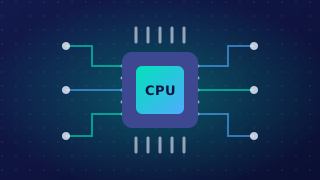
An embedded system has its own small set of hardware built into the larger device it belongs to: a processor and some memory. This hardware is dedicated to the device's one job, and the processor runs the program held in that memory to decide what to do with each input it receives.
The processor needs something to work on, so the device supplies inputs. Often these are sensors that measure something physical: temperature, light level, how full a tank is. Inputs can also come from a button you press or a dial you turn, perhaps to set the value the device should keep to.
Having read the input, the processor follows its program and drives an output. Outputs change something in the real world: a motor turns, a heater warms, a valve opens or closes, a light switches on, or a display shows a reading.
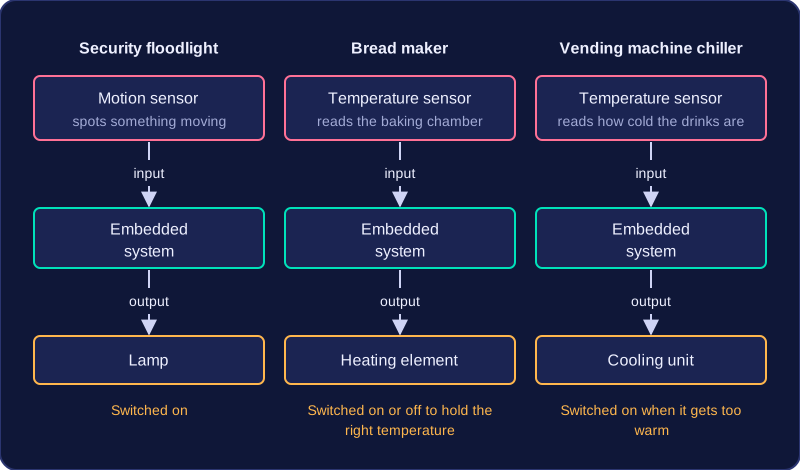
Input, processing and output in one device
Imagine a greenhouse that opens its own roof vent. A temperature sensor measures how warm the air is, and the processor compares that reading with the target temperature held in memory. If the air is too warm, the processor signals a motor to open the vent; when the sensor reports that the air has cooled, the motor runs the other way to close it. Nobody has to keep watch.
| Hardware part | Job in the greenhouse controller |
|---|---|
| Processor | Follows the program and decides when to move the motor |
| Memory | Holds the program and the target temperature |
| Input: temperature sensor | Measures the air temperature |
| Output: motor | Opens or closes the roof vent |
Why the loop matters
Notice what happens next: the output changes the temperature, the sensor reads the new temperature, and the processor acts again. This feedback loop is why embedded systems are so often used as control systems that work automatically. The system checks its inputs over and over and reacts through its outputs each time, holding a value within a range without a person making every decision.
Practise this
OCR GCSE Computer Science · Embedded Systems