Wired and Wireless Networks
Comparing Wired and Wireless Connections
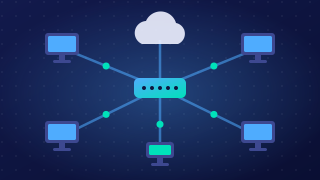
Wired and wireless connections trade convenience against speed, stability and security. A wired connection uses a cable plugged into a network socket. A wireless connection sends data as radio signals through the air, so no cable is needed.
| Feature | Wired | Wireless |
|---|---|---|
| Bandwidth | Usually higher | Usually lower |
| Reliability | Little interference or delay; walls do not block the signal | Limited range; distance, walls and other networks weaken or interfere with the signal |
| Security | Physical access to the cable or equipment is needed to intercept data | Signals spread out; a nearby device could pick them up, so data should be encrypted |
| Mobility | The device must stay near a socket | The device can move around within range |
| Cost and set-up | Cabling costs money and disrupts the building | Easy to add devices with no new cables; cheaper where cabling is difficult |
| Suitability | Fixed equipment; poor for devices with no wired port | Mobile devices and visitors |
Wired links win on performance and security. With higher bandwidth, more data travels each second. Because the signal stays inside the cable, walls and other obstacles do not block it and other networks cannot interfere, so the link is reliable with little delay. To intercept the data, someone must physically reach the cable or equipment. The catch is that every device must stay near a socket: installing cable costs money and disrupts the building, signal strength fades over long cable runs, and loose cables are a trip hazard.
Wireless links win on movement and expansion. You can carry a device around within range, another device joins with no new cable, and visitors can connect easily. Where cabling an existing building is awkward, wireless can be cheaper and quicker to set up. Its weaknesses follow from using radio: bandwidth is usually lower, range is limited, and distance, walls and other networks weaken the signal or interfere with it. Radio signals spread out from the device, so a nearby device could intercept them, which is why the data should be encrypted. Sharing one connection between many devices also slows it down.
Practise this
OCR GCSE Computer Science · Wired and Wireless Networks