Wired and Wireless Networks
Choosing a Network Connection
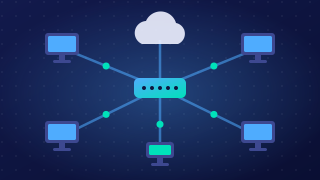
When you choose how a device should join a network, match the connection to what the device has to do. Weigh up six things: the bandwidth needed, the reliability needed, the security needed, whether the device must be mobile, the cost of equipment and installation, and whether the device actually supports the connection.
Matching the connection to the job
- Wired (Ethernet) suits fixed devices that send large amounts of data or hold sensitive data. A desktop in a dentist's reception that holds patient records stays on the desk, so a cable does not limit movement and gives a stable, private link that is hard to tap into from outside.
- Wireless (Wi-Fi) suits devices that move, or places where cable cannot go. A doorbell camera at the end of a long drive can send short clips over Wi-Fi, avoiding the cost of digging a trench for a cable.
- Bluetooth suits short-range, low-power links directly between two devices, such as a games controller sending button presses to a console. It uses little power but is not built for joining computers into a local area network.
Using more than one connection
Real networks mix connection types. A farm could use Ethernet for the office computer storing livestock records because it never moves and the files are sensitive, and Wi-Fi for a handheld scanner used in the barn because cabling across the yard would be costly and easily damaged. Wireless can also act as a backup: if a cable is damaged, staff can keep working over Wi-Fi while it is repaired.
Making a recommendation
A good recommendation names the connection and justifies it from the scenario's needs. For a garden centre wanting a till in each greenhouse to send sales to the office, use Wi-Fi for the greenhouse tills because they are moved as displays change and cabling across a wet site would be costly and easily damaged, but use Ethernet for the office computer holding accounts because it is fixed and the financial data needs the better security and reliability of a cable. Two connections can be recommended for different needs in the same network.
Practise this
OCR GCSE Computer Science · Wired and Wireless Networks