Sharing Resources
Peer-to-Peer Disadvantages
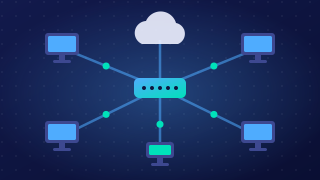
A peer-to-peer network has no central server, so the drawbacks follow from each computer having to look after its own files, backups and security. Files are not stored centrally, and there is no central place to manage the network.
Files are scattered
Each file is stored on an individual computer, often the one where it was created, rather than on a central server. To find a file you need to know which computer holds it, so you may have to search several machines before you track it down. Backups have the same problem: there is no automatic central backup, so every computer has to be backed up separately. If one person forgets, their files are at risk.
For example, a Scout troop's leaders keep their records on six different laptops: permission forms, kit lists and photos from each camp. To find a photo from last summer's camp, a leader has to remember which laptop it was saved on, and each leader has to copy their own files onto an external drive in case their laptop breaks.
Shared resources depend on the owner
A shared folder or printer is only available while the computer sharing it is switched on and working. If that computer is off, or its hard drive fails, everyone else loses access to whatever it was sharing. The same computer can also slow down for its own user, because it is using some of its processing power and network connection to send files to other people at the same time.
Security and growth
Security is set up on each computer separately, so the owner of each machine chooses the passwords and access rights. With no central control it is easy for one computer to be left unprotected, and keeping the settings consistent across the network becomes harder. The network is also harder to manage as it grows: more computers mean more separate machines to check, and performance drops because each computer has to deal with requests from a larger number of peers.
Practise this
OCR GCSE Computer Science · Sharing Resources