Software Licences
Legal and Ethical Issues of Software Licences
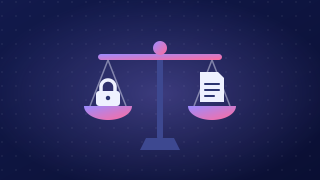
Every software licence is built on copyright: the software belongs to someone, and the licence sets out what other people may do with it, while the copyright stays with the owner either way.
So open source software is still protected by copyright and is still released under a licence. It is easy to assume that open source means nobody owns the code or that copyright does not apply; it does, and ignoring the licence conditions is just as much a breach of the law as it is with closed source.
Legal issues
Doing something the licence does not allow breaks copyright law, whichever type it is. Installing proprietary software on more computers than its licence permits, or redistributing open source code without keeping to its licence terms, are both copyright infringement. The licence is what tells you where the line is.
Ethical issues
Ethics is about what is fair, not just what is legal. With open source, others can take your code, change it and sell it on, and some may pass it off as their own work. The licence permits the reuse, but the original developer may still feel it is unfair after all their effort. Against that, open source is usually free, so more people can get hold of the software, including those who could never pay for it. A teenager teaching themselves to code at home can download the tools they need at no cost, and many people see that wider access as the fairer outcome.
| Open source | Proprietary | |
|---|---|---|
| Covered by copyright? | Yes, released under its licence | Yes, released under its licence |
| Who decides about copying and reuse? | The licence already gives those rights to everyone | The owner keeps those rights and sets the limits in the licence |
The ethical trade-off comes down to control: a proprietary owner keeps a tight grip on copying and distribution, while an open source owner gives that control away in exchange for wider use and reuse of their code.
Practise this
OCR GCSE Computer Science · Software Licences