Impact of AI
AI Transparency and Misuse
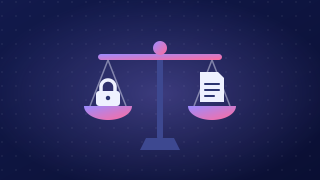
Transparency means being able to see and understand how a decision was reached. Many AI systems are not transparent: they give an answer without being able to say which factors produced it, and even the people running the system may not be able to explain a single result. That causes problems, and AI can also be misused deliberately.
Why hidden decisions cause problems
When a decision cannot be explained, an error is hard to spot and hard to challenge. The person affected may never find out that something went wrong, and the organisation using the system cannot check that it is behaving correctly. That makes it unclear who is accountable when harm is done, because nobody can point to the step where the mistake happened. A hidden fault is also likely to repeat for everyone in the same situation before anyone notices.
For example, a council uses AI to put housing repair reports into priority order. A tenant reports a leaking roof and the system rates it low priority. Staff can only say the system decided it, and two weeks later the ceiling collapses. Because the reasoning was never visible, she could not challenge the rating and the council could not see its priorities were wrong.
Misuse of AI
AI can also be used deliberately to cause harm:
- Invented material – AI can produce realistic pictures, video clips or voice recordings of events that never happened, quickly and at almost no cost.
- Misinformation – an AI-written notice claiming a town's water supply is unsafe can be shared hundreds of times, spreading panic and tying up the water company's phone lines before anyone checks it.
- Fraud and scams – a fake online shop with AI-made photographs of trainers at half price can take payments for goods that do not exist.
- Harassment – AI can generate hundreds of insulting messages or fake one-star reviews aimed at one person or small business, far faster than a person could type them.
The harm lands on real people: the resident who is not believed, the buyer who loses money, the shop owner whose reputation suffers.
Practise this
OCR GCSE Computer Science · Impact of AI