Implications of Choosing Cloud Technologies
Cloud performance
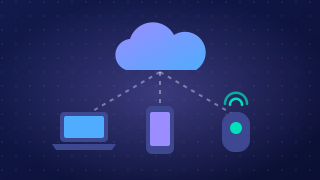
Performance is how quickly and effectively a cloud service responds to the user. It is not a single measurement: it depends on how responsive the service is to a user's actions, how complex the task is, the devices used and the communication technologies available.
What affects performance
The organisation needs a reliable, fast internet connection. Without an internet connection, users cannot access or store their data in the cloud at all, and slow speeds increase the time taken to upload and download files. If several people upload photos to a shared online album at the same time, each upload takes much longer on a slow connection than on a fast one.
Demanding or complex tasks take longer to complete and need more bandwidth, which is the amount of data that can be sent along a connection in a given time.
The capability of the devices used matters too. An older tablet with little memory may struggle to display a cloud document smoothly, even when the connection itself is fast.
Cloud compared with a local server
Cloud services are often thought to be slower than a local server, but in most cases this is not true. A local server can only use the processing power and storage that have been installed on it, so it may slow down when many people use it at once. A cloud provider has a large pool of machines and can allocate extra resources when they are needed, so performance stays steadier as demand changes.
| Aspect | Local server | Cloud service |
|---|---|---|
| Extra resources | Limited to the hardware already installed | Allocated from the provider's pool of machines |
| Effect on performance | May slow down when demand is high | More consistent as resources are reallocated |
Compatibility
Some performance problems happen when a provider's own products or services are not fully compatible with the systems an organisation already uses. A file saved in the provider's own format may open slowly or lose features when it is used in another program.
Practise this
Pearson BTEC Digital Information Technology · Implications of choosing cloud technologies