Packet Switching
Routing Decisions and Congestion
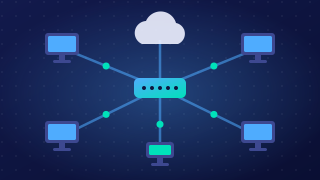
When a router forwards a packet, it often has more than one connected link it could send the packet on through. A routing decision is the choice of which link to use next. The router aims to choose the route that will carry the packet quickest, which is often the least congested one, so packets keep moving without unnecessary delay.
Tracking traffic
Routers keep track of traffic conditions on the links they use. For example, one link may be carrying a large amount of data and building up a queue, while another is quiet. The router records this information and shares it with other routers. This means routers do not have to rely only on their own experience; they can learn about congestion elsewhere.
Updating routing tables
Each router uses a routing table to store possible next steps for packets. When traffic information changes, routing tables can be updated. A route that was the best choice a moment ago may become a poor choice if it is now busy. The router then forwards later packets by a different link.
For example, a router at a college has two links towards a game server. Link A is faster but is handling lots of video traffic; link B is slower but almost empty. The router sends the packet by link B to avoid the congestion. When link A clears, updated information can make it the preferred choice again.
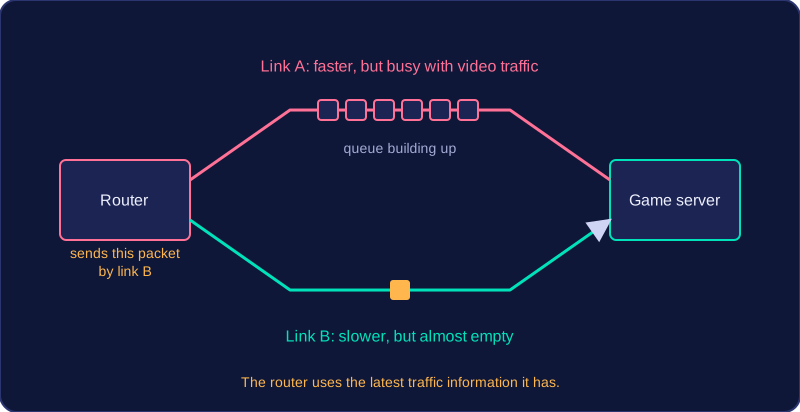
The router decides the next step for each packet using the latest conditions it knows about, rather than working out the whole journey in advance.
Practise this
Edexcel GCSE Computer Science · Packet Switching
Edexcel GCSE Computer Science · The Internet