Addressing
Addressing
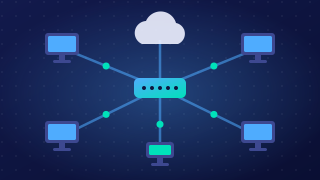
Every device connected to a network needs a unique address so that data reaches the right place. When data is sent across a network it travels in packets, and each packet has to arrive at the correct device rather than being delivered to every device on the network. The address acts like a label that lets the network pass each packet to the right destination.
IP addresses
An IP address is a unique identifier given to a device on a network, used when packets of data are sent and received. For example, a games console on a school network might request a level file from a server. The packets it sends carry the server's IP address as the destination, and the server's reply packets carry the console's IP address as the destination. An IP address can change: a school printer might have one IP address this term and a different one after the network is updated, even though nothing about the printer itself has changed. This means an IP address identifies a device's current connection to a network, not a person or a machine for ever.
MAC addresses
A MAC address is a permanent identifier set by the manufacturer of a network interface. Unlike an IP address, it does not change when the device joins a different network, because it is fixed to the hardware when the device is made. This lets other devices on a local network recognise the same piece of hardware even when its IP address is different.
| Address | Given by | Can change? |
|---|---|---|
| IP address | The network it is connected to | Yes, when it connects to a different network |
| MAC address | The manufacturer of the network interface | No, it is fixed to the hardware |
Practise this
Edexcel GCSE Computer Science · Addressing
Edexcel GCSE Computer Science · The Internet