Sound
Sample Rate
Sample rate is the number of samples taken each second. It is measured in hertz (Hz), where 1 Hz means one sample every second. A rate of 400 Hz means the computer measures the wave's amplitude 400 times during each second of the recording.
More samples, more detail
Taking more samples each second records more points along the wave. The measurements sit closer together, so the stored values follow the shape of the wave more closely. Quick rises and falls are picked up rather than stepped over, so the recording keeps more of the detail of the original sound.
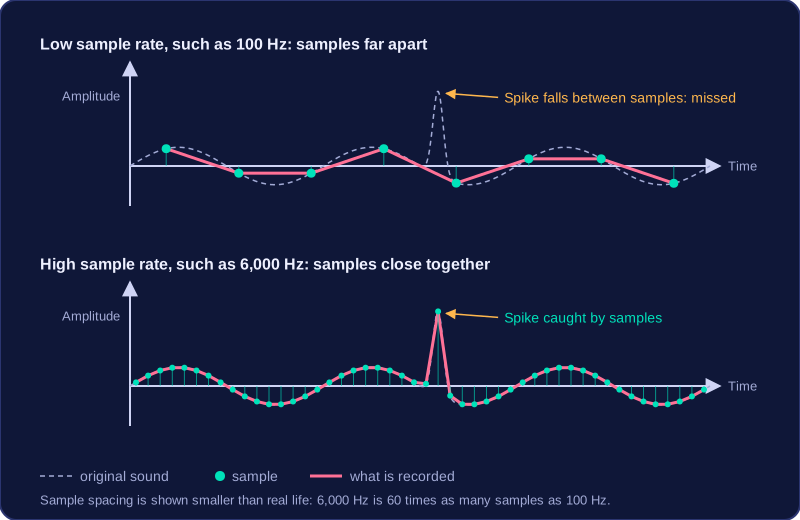
Imagine recording a balloon bursting. The bang is a sudden spike that lasts only a moment. At 100 Hz the computer takes just 100 samples in that second, with large gaps between them, so the spike could easily happen between two samples and be lost. At 6,000 Hz it takes thousands of samples, so the spike is much more likely to be caught.
| Sample rate | Samples each second | Effect on the recording |
|---|---|---|
| Low | Few | Rapid changes between samples can be missed |
| High | Many | Follows the wave closely and keeps more detail |
When the rate is too low
A low sample rate takes measurements far apart. If the wave changes quickly between two samples, such as a drum hit or the start of a note, that change may not be recorded at all. The digitised sound then differs from the original, and a short, sharp sound can end up quieter and less sharp than it really was. A higher sample rate makes missing these rapid changes less likely.
Sample rate only controls how often the wave is measured. How accurately each measurement is stored is a separate idea: bit depth.
Practise this
Edexcel GCSE Computer Science · Sound