Cyber Security
Prevention
Not all hackers are malicious, some hackers can be ethical, and work to help organisations defend themselves from malicious hackers. These ethical hackers may be employed to break into an test the security features of a computer system. They report any issues they find so that they can be addressed.
This is called penetration testing

We use a coloured hat system for identifying what kind of hacker someone is.
- White hat hackers are ethical hackers and carry out their activities with permission (authorised access)
- Grey hat hackers are ethical hackers but will hack systsems without permission. They may hack a system to bring attention to a security problem, or for a "bug bounty".
- Black hat hackers are malicious hackers
A penetration test (or Pen Test) is carried out by a professional security specialist hired by a company to attack their computer system in a similar manner to a real hacker.
After the penetration test the professional will generate a report highlighting areas of weakness so that the company can improve their security.
Encrypting stored data and data being sent over a network decreases the likelihood of data being stolen and accessed using a Man in the Middle attack.
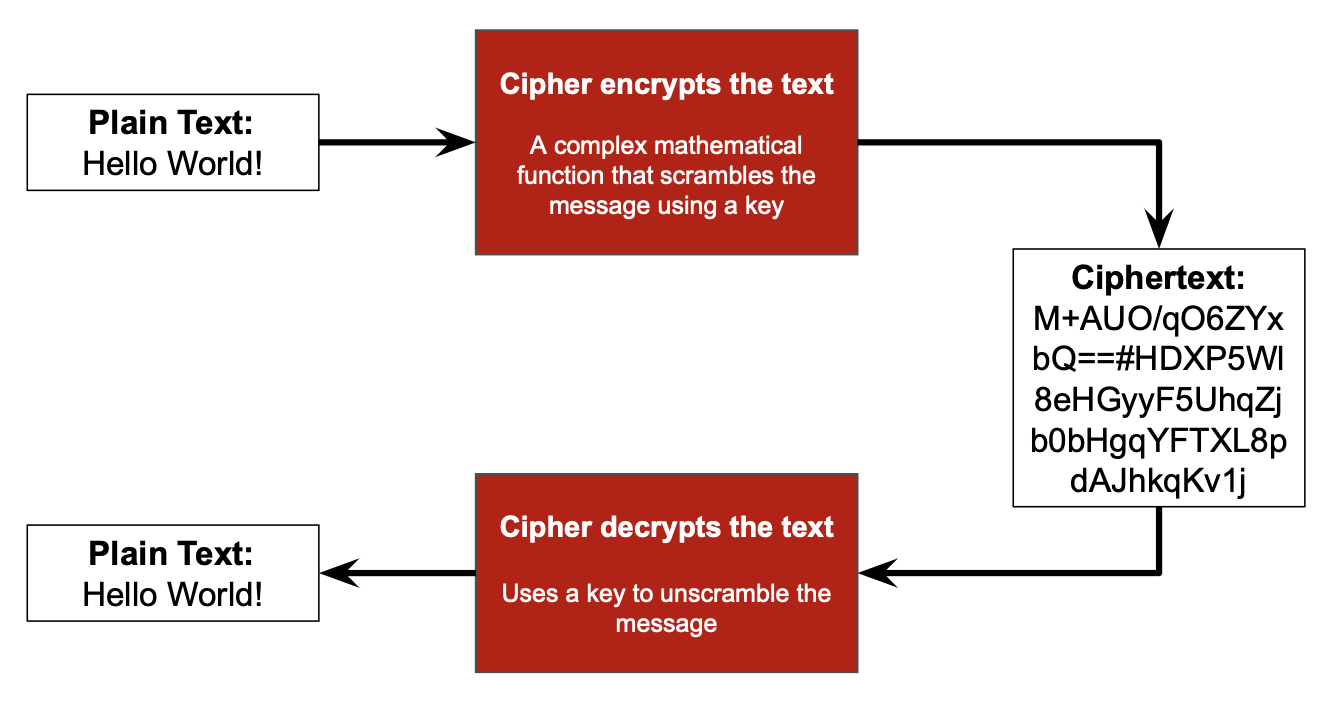
Encryption requires the use of ciphers - algorithms that use keys to scramble data (and then unscramble them to decrypt the data)
When encrypting data the "plain text" is ran through a cipher which, using a key, scambles the data. This scrambled data is referred to as "cipher text". This "cipher text" can be decrypted by someone with the cipher and the correct key.
Caesar Cipher
One of the earliest cipher used was the Caesar Cipher, named after Emperor Caesar who used a cipher to encrypt private and confidential messages.
The cipher is very basic using two rows of letters from the alphabet. One of the rows is shifted and the message is passed through the cipher matching the letters from the message using the top row and then writing down the letters on the bottom row.
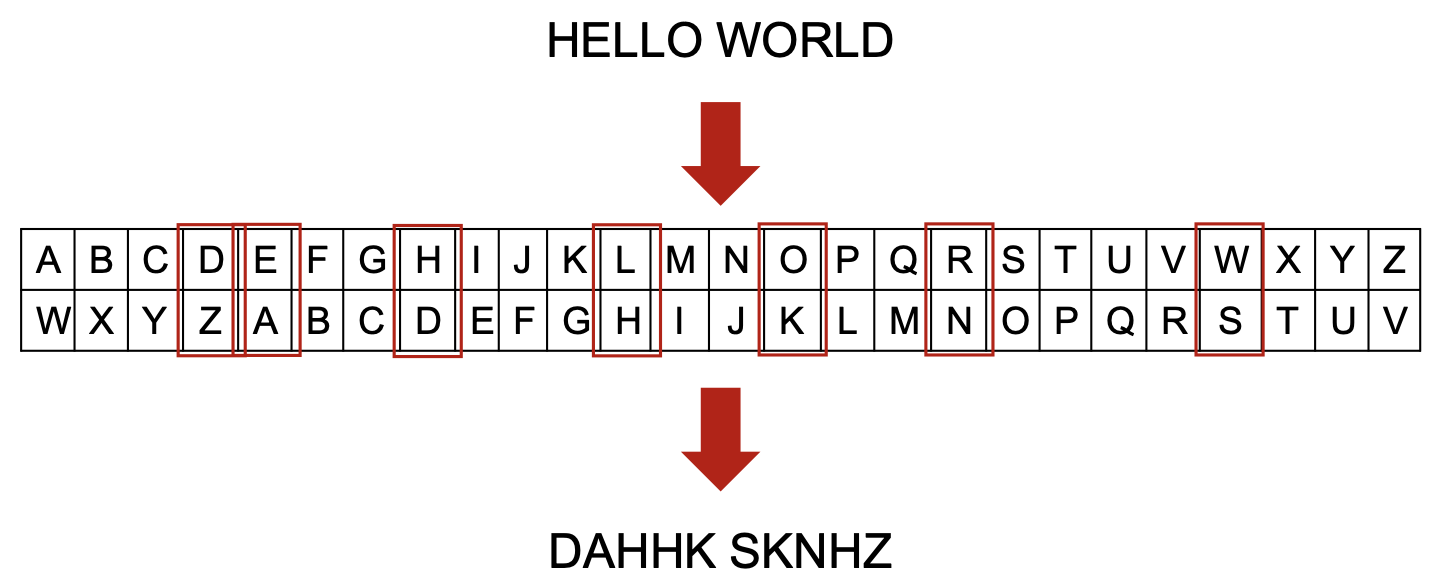
This process can be reverse so once the message has been received it can be decrypted. The recipient must know how many places the cipher has been shifted.
Caesar Ciphers are no longer secure and could be defeated by a computer in a matter of seconds. Most ciphers we use nowadays would take a single computer millions of years to defeat through brute force.