Business Economics
Exchange rates

An exchange rate is the price of one currency when it is swapped for another. For example, if £1 buys 1.35 Swiss francs, that is the exchange rate between the pound and the Swiss franc. It is not the price of a product abroad; it is the amount of another currency that one unit of currency will buy.
Appreciation and depreciation
When a currency rises in value, this is appreciation. A UK business buying imports finds them cheaper, because each pound buys more foreign currency. However, UK exports become more expensive for foreign buyers, because they need more of their own currency to buy pounds.
When a currency falls in value, this is depreciation. Imports become more expensive for UK businesses, while UK exports become cheaper for foreign buyers.
| Change | Imports for UK businesses | UK exports abroad | Foreign imports competing in the UK |
|---|---|---|---|
| Appreciation | Cheaper | More expensive for foreign buyers | Become cheaper, so competition increases |
| Depreciation | More expensive | Cheaper for foreign buyers | Become dearer, so competition may reduce |
Exchange rate changes affect businesses that import raw materials, export goods or face competition from foreign imports. A business importing materials may gain from appreciation because its costs fall, but an exporter may lose sales as its products look dearer abroad. Depreciation can help exporters and UK firms competing against imports, but it raises costs for importers.
Worked example
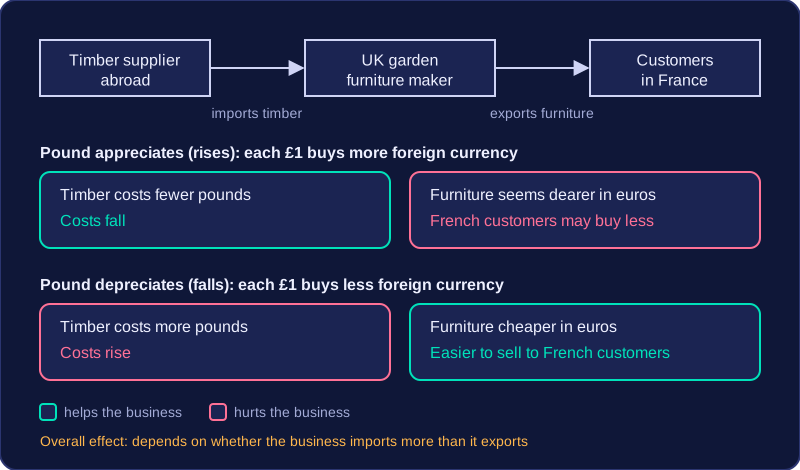
A UK garden furniture maker buys timber from abroad and sells some furniture to customers in France. If the pound appreciates, the timber costs fewer pounds, which reduces costs, but French customers may buy less because the furniture now seems more expensive in euros. If the pound depreciates, the timber costs more, but the furniture becomes cheaper for French customers. The overall effect depends on whether the business imports more than it exports, or the other way round.
Practise this
Edexcel GCSE Business · 1.5.4 The economy and business