Impacts of Modern Technology on Organisations
Dispersed and Distributed Data
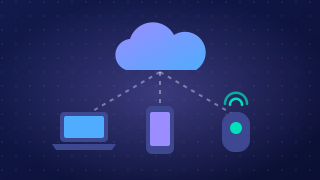
Dispersed data means that several full copies of the data are held, each one stored at a different location. For example, a small chain of three climbing centres keeps a complete copy of its booking records at each centre, and the copies are kept up to date so that every centre gives the same, current picture. If a fire damages one centre's computer room, another centre still has the full records, so the organisation can carry on serving customers. This supports disaster recovery: getting systems and data working again after a failure.
Distributed data is different: the data is split into parts, and each part is stored in a separate location, so no single location holds the whole record. The parts are brought back together only when someone needs the whole record. For example, a youth charity might split each young person's record into three parts held in three regional offices. To view the full record, the system reassembles the parts. This can improve security because an unauthorised user would need access to every location, not just one, to get the complete data.
Comparing the two
| Feature | Dispersed data | Distributed data |
|---|---|---|
| What is stored | A full copy in each location | A different part in each location |
| Main benefit | Disaster recovery: another location has a full copy | Security: an unauthorised user needs all locations |
| How it is used | Read the data from any location | Parts are reassembled when needed |
Both methods depend on available infrastructure: working network links, devices and systems to reach the copies or to gather the parts together. If one location is offline, access can fail. Also, every extra location is another place that must be protected, so more locations increase the number of points that must be secured.
Practise this
Pearson BTEC Digital Information Technology · Impacts of modern technology on organisations