Modern Technologies (BTEC)
Changes to Modern Teams
Contents
A world team is a team whose members are not limited by where they live or work. The organisation can build the team from different towns, countries or continents instead of recruiting only people who can travel to one building.
How technology makes it possible
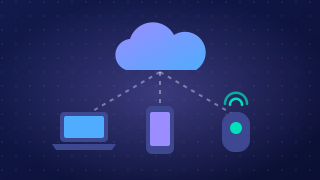
Modern tools remove the need for everyone to share a desk. Cloud storage lets members open the same files and keep one up-to-date copy; video conferencing lets them talk face to face; instant messaging handles quick questions and decisions. A file saved by one member can be opened by another minutes later, so work can move on without waiting for a meeting.
What the organisation gains
- A wider pool of talent: the organisation can choose from many more applicants, so a role is more likely to be filled by someone with exactly the right skills. A small organisation can also bring in a specialist for a short task.
- Lower costs: it can keep its building small, because not every member needs a permanent desk there, and it does not need to pay for members to travel to one office. It also spends less on bringing people together for every discussion.
- Local knowledge: members in different places can point out what users in their area expect, such as language, habits or buying preferences, so the product is less likely to miss something important.
- Flexibility and longer cover: when members are in different time zones, work can pass from one to another at the end of their day, so progress can continue outside one country's working hours. This can make the team more productive.
Imagine you run a small studio making a puzzle game. You hire an illustrator in Portugal, a programmer in Kenya and a tester in New Zealand. They share artwork through cloud storage, meet by video call and use instant messaging for quick fixes. You gain a range of ideas, and the shared files keep everyone working from the same version.
The benefit is not simply that staff are in different places. It is what the organisation gains: talent, skills, ideas, cost savings or longer cover.
Diversity means a team contains people with different backgrounds, experiences and skills. When technology lets an organisation build a world team from a wider area, that team can end up much more varied than one where everyone shares an office — and each member can bring a different view to a decision.
Diversity is wider than nationality
It is easy to assume diversity only means people of different nationalities or ethnicities. In practice, a team can be diverse because its members differ in age, gender, disability, education, beliefs or life experience, and because they have different strengths and responsibilities at home. A multicultural team is one whose members come from different cultures, which can give a wider range of perspectives and ideas to draw on.
Differences need managing
Mixed cultures can bring different working practices: attitudes to deadlines, how meetings are run, and how directly people speak. On a video call, one member may find a blunt "that won't work" rude when it was meant as useful feedback. Language differences can slow things down too, so teams need clear, patient communication and agreed ways of working.
Why diversity helps
Different viewpoints are useful when a team solves problems or designs something new, because a group where everyone thinks the same way tends to miss the same gaps. Diversity can support creativity and better problem solving, but it is no guarantee — a diverse team that communicates badly can do worse than a small team that shares ideas well. That is why technology matters: video calls, messaging and shared documents let members who rarely or never meet build relationships and swap ideas quickly. For example, a college robotics club with members from Year 9 to Year 13, including one who has dyslexia and checks that every diagram has clear labels, catches more faults at testing because each member checks the design in a different way.
24/7/365 means a service or a team operates 24 hours a day, 7 days a week, 365 days a year, so it is available every hour of every day, including weekends and public holidays. The team as a whole never has a closed period, but that does not mean every person works all the time.
There are no set working hours for the whole team. Instead, different members cover different parts of the day. This is easier when the team is a world team with members in different time zones: someone can work their normal daytime hours while another member is asleep, and together they keep the service running. For example, an online chess club has fair-play volunteers in Edinburgh, Vancouver and Christchurch. Each volunteer reviews new games during their normal working day, so suspicious games are checked around the clock without anyone staying up all night.
Why organisations use it
Continuous cover means customers can get help at any hour, which matters if people use the service overnight or in another country. It also lets work on a project continue for longer periods, because when one member finishes for the day, another can pick up the shared work.
Digital technology makes this possible. Cloud storage, shared calendars and messaging let members open the same files, see who is on duty and read updates at any time, even when they are not online together.
24/7/365 describes the service, not each member of staff. It would be wrong to say everyone on the team works 24 hours a day; the cover comes from the team sharing the hours between them.
Office-based working means staff work in a shared physical workplace, such as a company office or design studio, rather than from home or another location. Everyone works in the same building, so communication can happen in person.
Why teams often work well in an office
Sharing a workplace supports direct communication. Staff can ask a quick question at a desk instead of waiting for a reply message, and they can hold face-to-face meetings where tone and body language make meaning clearer. It also builds team relationships: people get to know each other, and a colleague may notice when someone looks stuck and offer help. For example, in a small video production company, an editor can spot that a new starter is unsure how to export a file and show them straight away, avoiding a delay.
What it limits
Office-based working can reduce location flexibility. Staff must travel to the workplace, which takes time and may cost money. It can also narrow the pool of people an organisation can employ, because staff must be able to get to the site. A designer who wants to spend a fortnight working from a relative's house in another region may not be able to, if the large-format printer and cutting table she needs are only in the studio.
Office-based staff in a modern team
Modern teams can be flexible about location: some members are office-based while others work remotely, so a team may use a mixture of both. An organisation choosing between the two weighs the better communication and team building of an office against the wider talent pool and cost savings that remote working can bring. For example, a further education college keeps its reception and student support staff office-based because learners need to speak to a person at the desk, while its web team works from home most of the week.
A modern team can include a mixture of permanent staff and casual staff. This gives an organisation a reliable core of workers while allowing it to bring in extra people when demand changes.
Comparing the two
| Permanent staff | Casual staff |
|---|---|
| Have an ongoing employment contract | Employed as needed, often on short-term or zero-hours contracts |
| Work regular hours | May work irregular hours |
| Receive entitlements such as holiday and sick pay | May not receive the same entitlements |
Why use a mix?
The mix gives an organisation flexibility. It can take on casual staff during busy periods or to cover absence, then reduce their hours when things are quieter. This helps it meet changing demand without paying for staff it does not need. For example, a garden centre might keep permanent staff all year and hire casual staff for the busy spring planting season.
Drawbacks of casual staffing
Casual staff may need training each time they are taken on, which takes time and costs money. They may also be less involved in the team, so consistency and team relationships can suffer. Permanent staff help provide stability and keep knowledge in the organisation.
An inclusive workplace is one where every member of staff is valued and treated with respect and equality. It is about the everyday culture of the organisation: how people speak to each other, who gets heard and who gets the chance to progress.
Everyone can take part
In an inclusive culture, all staff can contribute ideas and are considered for the same opportunities, such as training or promotion. A diverse workforce brings different backgrounds and experiences, but that diversity brings the most benefit when people feel confident to speak up. For example, a manager might share discussion points before a meeting so that a staff member who needs more time to process information can prepare and contribute.
Inclusivity is not only about physical access to the building. It also includes assistive technology (hardware or software that helps someone carry out their job), supporting wellbeing, involving staff and treating everyone with respect and equality.
Wellbeing and involvement
Supporting staff wellbeing helps people do their best work. That can mean reasonable workloads and access to mental health support. Staff should also be involved in decisions that affect them, such as a change to working practices or new software. Consulting the people who do the job shows respect and usually produces a better change, because they spot problems a manager would miss. For instance, when a garden centre changes how its plant-watering duties are shared, the staff who do the watering help decide the new arrangement, so it fits real tasks and feels fair rather than being imposed.
The balance
Inclusive changes cost money and can disrupt work. Training staff to use new assistive software takes time away from other tasks, and adjusting how decisions are made can slow things down at first. The benefit is that staff can take part fully, morale improves and the organisation is more likely to keep experienced people. That trade-off is why inclusivity is a culture to build, not a one-off purchase.
A modern team often works across different locations, using technology to stay in touch. That brings challenges a team sharing one room does not face.
What makes it harder
- Time zones: when members work in different parts of the world, a quick question can wait until someone's next working day. Finding a meeting time for everyone can be slow, so replies and decisions take longer.
- Communication: messages and video calls can lose tone of voice and body language. A short written comment may seem blunt when it was meant to be helpful, so misunderstandings are more likely.
- Technology failure: if the internet connection, collaboration platform or a device fails, members may be unable to work or reach shared files. The whole team can be held up by one person's problem.
- Unequal equipment: not every member has the same quality of device or connection. Someone with a slow link may struggle to join calls or upload work, which leaves them at a disadvantage.
- Managing at a distance: a manager cannot easily see how work is going. It is harder to check progress and to notice when someone is struggling.
Reducing the problems
Organisations can make these challenges smaller by setting agreed ways of working, such as response times and where files are stored. Reliable collaboration tools, training and clear communication rules help everyone take part fairly. For example, a small games studio with an artist in Leeds, a coder in Lisbon and a tester in Toronto could set a shared two-hour window for calls, use one shared task board and ask everyone to write clear subject lines. This does not remove time-zone differences, but it stops small delays turning into confusion.