Network Speed
Bandwidth
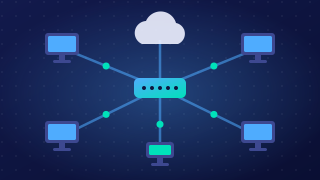
Bandwidth is the maximum amount of data a network connection can transmit in a given period of time. People often talk about a connection's "speed", but that word is vague: it could mean how much data is carried each second, or how long a message takes to arrive. Bandwidth is the preferred term for the first of these — the maximum amount of data that can be sent each second.
Bandwidth describes the capacity of a connection, not the rate at which data is flowing right now. A school network link with a bandwidth of 900 Mbps can carry up to 900 megabits every second, but while you are only sending a short email it may be carrying far less than that. Think of a motorway: four lanes allow up to four lanes' worth of traffic to flow side by side, even on a quiet Sunday morning when the road is nearly empty.
Bandwidth is measured in bits per second, written bps. Networks move such large amounts of data that you will usually see Mbps (megabits per second) or Gbps (gigabits per second) instead. Bandwidth is not the same as latency: latency measures the delay before data arrives, and it is measured in units of time such as milliseconds, never in bits per second.
Practise this
Edexcel GCSE Computer Science · Network Speed
Edexcel GCSE Computer Science · Wired Connections
Edexcel GCSE Computer Science · Wireless Connections